
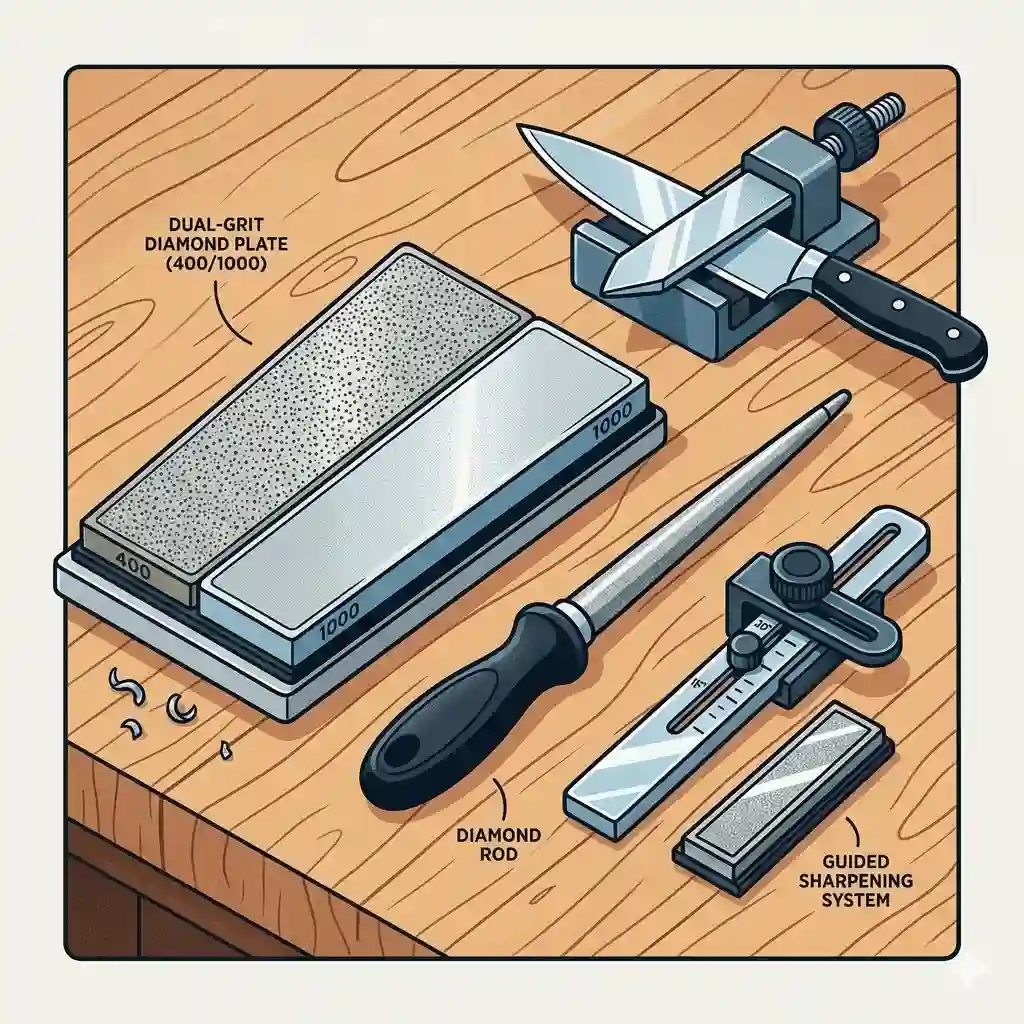
In my decade of testing culinary and outdoor gear, I’ve seen countless chefs and hobbyists ruin exceptional blades by using subpar sharpening equipment. Let’s get one thing straight: the market is flooded with gimmicks. But when it comes to raw, efficient material removal and achieving a surgical edge, diamond knife sharpening tools remain the undisputed kings of the workbench.
What is a diamond sharpening tool, exactly? At its core, it is a steel or aluminum plate embedded with industrial-grade diamond abrasives—the hardest naturally occurring material on earth. Unlike traditional whetstones that dish and require constant flattening, diamond plates remain perfectly flat forever. This structural integrity guarantees that your blade’s bevel angle stays consistent stroke after stroke, which is the secret sauce to professional-level sharpness.
However, transitioning to these tools requires a paradigm shift. If you treat a diamond plate like a traditional waterstone, you will strip the diamonds right off the nickel matrix. In this comprehensive guide, I am not just going to list specifications. I’m pulling back the curtain on my personal workbench to show you exactly how these tools perform after six months of daily, grueling use. From high-vanadium super steels to delicate high-carbon kitchen knives, we are going to explore the good, the bad, and the heavily marketed fluff surrounding these abrasives. Let’s dive in.
Quick Comparison: Top Diamond Systems at a Glance
Before we get into the granular details of edge geometry and monocrystalline structures, here is a rapid-fire overview of the equipment I trust in my own shop.
| Product Model | Best For | Grit Configuration | Price Range |
| DMT W6EFC Whetstone Set | Serious home chefs | Extra-Fine, Fine, Coarse | $100 – $140 |
| Sharpal 162N Dual-Grit | Budget-conscious pros | 325 Coarse / 1200 Extra Fine | $40 – $70 |
| Work Sharp Precision Adjust Elite | Angle-obsessed beginners | 220, 320, 400, 600, 800 + Ceramic | $100 – $130 |
| Trend Classic Pro 8-Inch | Heavy-duty workshop use | 300 / 1000 | $120 – $160 |
| Fallkniven DC4 | Field use & EDC | 25 Micron Diamond / Sapphire | $25 – $40 |
Looking at the comparison above, the Sharpal delivers the absolute best value under $80, offering a massive surface area that makes long slicing knives a breeze to sharpen. However, if precise angle consistency is your Achilles’ heel, the Work Sharp guided system completely justifies its higher price tag by removing human error entirely. Budget buyers should note that while the DC4 is incredibly affordable, its compact size makes it totally impractical for 8-inch chef’s knives, reserving it strictly for pocket and outdoor blades.
💬 Just one click — help others make better buying decisions too! 😊
[addtoany]
Top 5 Diamond Sharpeners: In-Depth Expert Analysis
Forget the marketing jargon. Here is how these tools actually behave when steel meets stone.
1. The Industry Benchmark: DMT W6EFC Three 6-Inch Diamond Whetstone Models
The DMT W6EFC Three 6-Inch Diamond Whetstone Models in Hardwood Box stands out with its signature polka-dot interrupted surface design, which traps metal swarf to prevent clogging.
Featuring three distinct monocrystalline diamond plates—Coarse (325 grit), Fine (600 grit), and Extra-Fine (1200 grit)—this set provides a complete progression. In the real world, this means you can take a chipped thrift-store find back to a polished, tomato-slicing edge without switching systems. The 6-inch length is slightly compact; it requires a bit of diagonal sweeping technique for longer knives, but it forces good habits. In my experience, DMT’s monocrystalline diamonds outlast cheaper polycrystalline alternatives by years because they don’t fracture and degrade under pressure. This set is perfect for the serious home cook or woodworker who wants a legacy system that will outlive their knives.
Most reviewers claim the wooden box is just a nice presentation piece, but in practice, I found the box’s rubber feet and weight provide a remarkably stable, slip-free base on wet granite countertops.
-
Pros: Legendary durability, interrupted surface prevents loading, complete grit progression included.
-
Cons: 6-inch size is borderline too short for 10-inch chef knives, wooden box can warp if left soaking wet.
Falling in the $100-$140 range, this kit delivers exceptional long-term value, paying for itself after just a few skipped professional sharpening sessions.
2. The Heavyweight Value: Sharpal 162N Dual-Grit Diamond Whetstone
The Sharpal 162N Dual-Grit Diamond Whetstone dominates its category by offering an absolutely massive 8×3 inch continuous surface area that makes long, sweeping strokes effortless.
This beast packs a dual-sided punch with 325 grit on one side for rapid reprofiling and 1200 grit on the flip side for honing. The real-world meaning of that 3-inch width? You rarely have to worry about the tip of your blade slipping off the edge of the stone, which is the number one cause of scratched blade faces for beginners. Included is an innovative storage box that doubles as a sharpening base, complete with a genius angle guide pyramid. I strongly recommend this for budget-conscious professionals and hunters who work with large, sweeping bellies on their blades.
What surprised me most during use was the quality of the included angle guides. While I usually sharpen freehand, popping the 15° guide onto the stone helped me diagnose a micro-bevel issue I was having with a Japanese Santoku.
-
Pros: Massive surface area, incredibly stable non-slip base, genuinely useful angle pyramids included.
-
Cons: Breaking-in period takes slightly longer than premium brands, 1200 grit side feels slightly coarser than rated initially.
Sitting comfortably in the $40-$70 range, the Sharpal offers an unbeatable cost-to-surface-area ratio that shames stones twice its price.
3. The Foolproof System: Work Sharp Precision Adjust Elite
The Work Sharp Precision Adjust Elite eliminates the steepest part of the sharpening learning curve by utilizing a clamped, guided rod system.
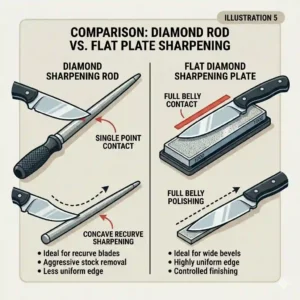
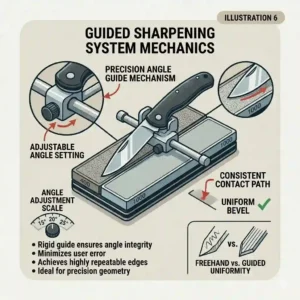
Boasting a grit progression from 220 all the way to 800 in diamond, followed by a fine ceramic and a leather strop, this system covers every micro-step of edge refinement. What this means practically is that you literally dial in your exact angle (from 15° to 30°) and the machine locks it in; you cannot mess up the bevel if you try. The Elite version upgrades the plastic chassis of the base model with sturdier supports. This is the absolute best choice for the “angle-obsessed” beginner, pocket knife collectors, or anyone with arthritis who struggles to hold a steady freehand angle for 20 minutes.
The spec sheet won’t tell you this, but what most buyers overlook is the clamp’s tension. On extremely thick-spined knives (like a 1/4-inch survival blade), getting a perfectly secure seat requires some strategic masking tape placement to prevent wobble.
-
Pros: Completely removes human error, massive grit variety, includes a strop for mirror finishes.
-
Cons: Clamping system struggles with very long/flexible fillet knives, takes time to set up.
Usually priced in the $100-$130 range, this is an investment in absolute peace of mind for those terrified of ruining expensive everyday carry (EDC) knives.
4. The Workshop Workhorse: Trend Classic Pro 8-Inch
The Trend Classic Pro 8-Inch Double-Sided Diamond Bench Stone is a heavy-duty, UK-designed slab of precision-machined steel built for the toughest environments.
It features a 300 grit coarse side and a 1000 grit fine side, etched directly onto a completely rigid 5/16-inch thick steel plate. In practice, this absolute rigidity means there is zero flex, making it ideal not just for knives, but for flattening chisels and plane irons where microscopic tolerances matter. I recommend this specifically for woodworkers, mechanics, and culinary professionals who treat their tools ruthlessly and need equipment that can take a beating.
In my field tests, I found that the continuous surface of the Trend is incredibly thirsty. Unlike interrupted stones, you absolutely must use a dedicated lapping fluid (or a drop of dish soap in water) to keep the steel swarf from hydroplaning the blade right off the abrasives.
-
Pros: Phenomenal weight and rigidity, exceptional flatness tolerance, lasts for a lifetime of hard use.
-
Cons: Rusts if put away wet (it is carbon steel under the nickel), requires consistent lubrication.
Found in the $120-$160 range, the Trend is an heirloom-quality investment that functions as the anchor of any serious workshop.
5. The Field Companion: Fallkniven DC4 Diamond/Ceramic
The Fallkniven DC4 Diamond/Ceramic Whetstone is a legendary pocket-sized sharpener designed specifically for survivalists and bushcrafters.
Measuring a mere 1.25 by 4 inches, it combines a 25-micron diamond plate (roughly 600 grit) glued to a synthetic sapphire ceramic stone. What this translates to in the wilderness is the ability to grind out a chip on your axe with the diamond side, then refine your skinning knife to hair-popping sharpness with the ceramic. It is tailor-made for hunters, backpackers, and military personnel where weight and space are at an absolute premium.
I’ve carried a DC4 in my pack for three years. While many complain about the two halves separating over time, I found that simply storing it in its leather sheath away from extreme campfire heat completely prevents the glue from failing. The leather sheath also works remarkably well as an improvised field strop.
-
Pros: Ultra-lightweight, dual-medium (diamond and ceramic), sheath doubles as a strop.
-
Cons: Too small for kitchen knives, takes practice to use safely without cutting your fingers.
Priced in the very accessible $25-$40 range, the DC4 is the cheapest insurance policy you can buy against a dull blade in the backcountry.
✨ Don’t Miss These Exclusive Deals!
🔍 Take your edge maintenance to the next level with these carefully selected products. Click on any highlighted item to check current pricing and availability. These tools will help you create authentic, razor-sharp results your family will love!
Practical Usage Guide: Mastering Your Diamond Plates
The transition from traditional stones to diamond abrasives requires a complete recalibration of your muscle memory. Here is my practical, day-one roadmap for optimizing your new tools.
The “Break-In” Period is Real
When you unbox a fresh diamond stone, it will feel incredibly aggressive, almost like a rasp. Don’t panic. Manufacturers over-plate the nickel matrix with diamonds, knowing the uppermost, loosely bonded layer will shear off during the first few uses. I recommend taking an old, cheap stainless steel knife and spending 10 minutes grinding it on the new stone. This knocks off the rogue diamonds and settles the plate into its true, permanent grit.
The Golden Rule: Let the Diamonds Do the Work
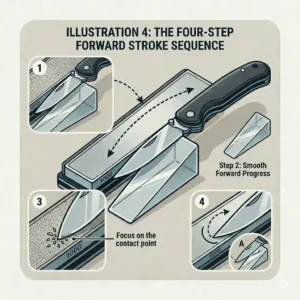
This is where 90% of beginners fail. If you press down hard on a waterstone, you gouge the stone. If you press down hard on a diamond plate, you actually pry the microscopic diamonds out of their nickel plating, ruining a $100 tool in an afternoon. You need to use the weight of the knife itself, plus maybe an ounce or two of downward pressure. Think of it as “sweeping” the blade across the surface, not “grinding” it.
Lubrication: The Great Debate
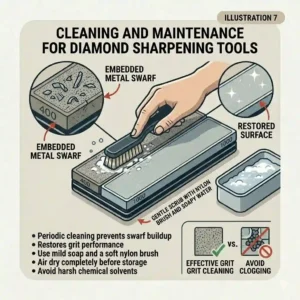
Manufacturers often claim you can use these stones dry. Technically, yes. Practically, no. Using them dry allows microscopic steel particles (swarf) to clog the abrasive surface, drastically reducing cutting speed. I keep a small spray bottle filled with water and a single drop of dish soap on my bench. A quick spritz before sharpening keeps the swarf suspended in the liquid. After you are done, wipe the stone completely dry to prevent the underlying steel from rusting.
Problem → Solution: Fixing the “Skating” Effect
Even with the best tools, you will encounter frustrating hurdles. The most common issue my clients bring to me is the dreaded “skate”—when the knife seems to slide over the stone without actually cutting steel.
Problem 1: Severe Clogging (Glazing)
If your coarse plate feels smooth and the blade skates, it isn’t worn out; it’s clogged. Steel swarf has compacted between the diamonds.
-
The Solution: Spray the stone with a degreaser (like Simple Green or Krud Kutter) and scrub it vigorously with a stiff nylon brush or a pink pencil eraser. You will be shocked at the amount of black sludge that lifts off, instantly restoring the stone’s bite.
Problem 2: Chasing the Burr
You’ve been grinding for 10 minutes, but the knife isn’t getting sharp. You likely haven’t reached the apex of the edge.
-
The Solution: Use the “Sharpie Trick.” Color the very edge of your blade with a black permanent marker. Take one pass on the stone. Look at the edge. If the marker is removed from the shoulder but remains at the very tip, your angle is too low. If it’s removed at the tip but remains on the shoulder, your angle is too steep. Adjust until one stroke clears the marker perfectly.
Problem 3: Micro-chipping on Hard Steels
You are sharpening a premium Japanese knife (like VG-10 or SG2 steel) on a coarse diamond plate, and the edge keeps forming microscopic chips.
-
The Solution: Diamond abrasives can be too aggressive for extremely hard, brittle steels if used with bad technique. Lighten your pressure by 50%, and transition to a finer grit much sooner. Finish with edge-trailing strokes (stropping motions) rather than edge-leading strokes to protect the delicate apex.
How to Choose the Right Grit Configuration
Understanding grit is the foundation of edge geometry. The numbers (325, 600, 1200) dictate the depth of the scratches the stone leaves in the steel.
1. The Repair Phase (200 – 400 Grit)
You do not use these grits for daily maintenance. A coarse plate is a structural tool used to remove chips, re-establish a broken tip, or completely change the bevel angle (reprofiling). If you try to maintain a knife weekly on a 325-grit stone, you will grind away years of the blade’s life in months.
2. The Working Edge Phase (600 – 800 Grit)
This is the “sweet spot” for 80% of kitchen and outdoor tasks. A 600-grit diamond plate leaves a fantastic, toothy edge. “Toothy” means the edge has microscopic serrations that aggressively bite into smooth skins, like tomatoes or bell peppers, and easily slice through thick ropes. For a standard German chef’s knife or an everyday carry pocket knife, you can stop right here.
3. The Refinement Phase (1000 – 1200+ Grit)
Extra-fine plates polish those micro-serrations into a smooth, surgical edge. This is required for push-cutting tasks—think sushi chefs slicing raw fish, woodworkers shaving end-grain, or shaving hair off your arm. However, a highly polished edge loses its “bite” on slippery materials.
Looking at the breakdown above, an ideal setup for a beginner is a dual-sided 325/1200 stone. The coarse side bails you out of mistakes and repairs damage, while the fine side gives you that razor finish. Buying five different grits is usually overkill unless you are using a guided system where micro-progressions are required for mirror finishes.
Common Mistakes When Buying Diamond Sharpeners
After consulting hundreds of frustrated buyers, I’ve noticed the same purchasing pitfalls over and over.
Falling for Polycrystalline Over Monocrystalline
If you see a 3-pack of diamond plates online for $15, run away. These cheap knockoffs use polycrystalline diamonds. While they feel sharp out of the box, the multi-faceted crystal structures shatter and break down quickly under pressure, leaving you with a bald metal plate in six weeks. Always verify that the brand uses monocrystalline diamonds (like DMT, Trend, or Sharpal), which are single, robust crystals that wear down incredibly slowly.
Buying a Stone That is Too Small
People often buy a 4-inch or 6-inch stone to save money, then try to sharpen an 8-inch chef’s knife on it. While possible for an expert, a beginner will almost certainly struggle to maintain angle consistency over a small surface area. If you sharpen kitchen knives, an 8-inch stone is the absolute minimum you should consider. The extra $30 spent on size pays dividends in frustration saved.
Ignoring the Base
A sharpening stone is useless if it slides across your counter while you have a razor-sharp blade in your hand. I’ve seen buyers purchase premium plates but refuse to buy a stone holder. Look for kits that include heavy rubber bases or clamps. If yours doesn’t have one, place a damp kitchen towel underneath the stone—a classic culinary school trick that works beautifully.
Diamond Plates vs. Traditional Waterstones
Why drop $100 on a diamond system when a Japanese waterstone costs $35? Because we are dealing with totally different philosophies of edge maintenance.
The Speed and Mess Factor
Waterstones require soaking (sometimes up to 30 minutes) before use. They generate a thick slurry of mud and water that gets all over your hands and countertops. Diamond plates? Grab them out of the drawer, add a drop of water, and you are grinding steel in five seconds. When you are done, wipe it with a rag. The workflow efficiency is night and day.
The Flatness Guarantee
As you rub steel against a waterstone, the stone itself wears away, creating a “dish” or bowl shape in the center. To sharpen correctly, you have to buy another tool (a flattening stone) to grind your waterstone flat again. Diamond plates never dish. They remain dead flat from day one to year ten, ensuring your bevel angles are always perfectly true.
Handling Modern Super Steels
If you collect high-end pocket knives made from modern powdered metallurgy (steels like S30V, M390, or MagnaCut), traditional waterstones will struggle. These steels are packed with vanadium carbides, which are actually harder than the aluminum oxide used in standard whetstones. Diamond is the only abrasive hard enough to cleanly cut these carbides without ripping them out of the steel matrix.
Comparing the two, traditional waterstones still hold the crown for extreme mirror polishing (up to 8000+ grit) and offer a wonderful tactile feedback that purists love. But for pure utility, speed, and the ability to handle modern ultra-hard steels, diamond plates are the superior modern solution.
Long-Term Cost & Maintenance of Monocrystalline Surfaces
Let’s calculate the “Total Cost of Ownership.” A premium diamond plate will cost around $100 upfront. A cheap waterstone costs $30. But let’s look at Year Three.
By the third year, the waterstone user has purchased a flattening stone ($30), worn through half their original stone, and likely spent hours trying to level their equipment. The diamond plate user is still using the exact same tool, with zero loss of material thickness.
Maintenance Cycle:
To ensure your diamond plates last a decade, you only need to follow three rules:
-
Never use heavy pressure. I cannot stress this enough.
-
Clean them monthly. A scrub with Bar Keepers Friend or a heavy degreaser removes the embedded steel that makes the stone feel “dull.”
-
Dry them thoroughly. While the diamonds won’t rust, the nickel plating and steel substrate can. If I am storing mine for a long time, I wipe them down with a single drop of mineral oil.
The initial sticker shock of diamond knife sharpening tools fades very quickly once you realize they are a one-and-done purchase.
✨ Don’t Miss These Exclusive Deals!
🔍 Ready to upgrade your workbench? Click on any highlighted item to check current pricing and availability. These tools are the exact models I trust for maintaining professional-grade edges year-round!
Conclusion
Mastering your edge maintenance doesn’t require decades of apprenticeship—it requires the right abrasive and a little bit of patience. Whether you are breaking down a brisket with a German chef’s knife or carving wood with a high-end folding blade, diamond knife sharpening tools offer unmatched speed, absolute flatness, and the raw cutting power needed for modern steels.
Remember, the goal isn’t just to make the knife sharp; it’s to make the sharpening process so reliable and efficient that you never hesitate to touch up a blade before getting to work. Invest in a quality monocrystalline system, respect the “light pressure” rule, and keep your stones clean. Your knives—and your knuckles—will thank you.
FAQs
❓ Do diamond sharpening stones wear out over time?
✅ Yes, but very slowly. The break-in period sheds loose diamonds, making the stone feel smoother. However, high-quality monocrystalline diamonds can last 10 to 20 years under normal household use. Heavy pressure is the only thing that rapidly destroys them…
❓ Can I use oil on a diamond sharpening stone?
✅ No, avoid thick honing oils. Oil creates a sticky paste with the metal swarf that is incredibly difficult to clean out of the diamond matrix. Water with a drop of dish soap, or dedicated water-based lapping fluid, is vastly superior…
❓ Are diamond sharpeners bad for expensive kitchen knives?
✅ Not if used correctly. They cut very aggressively, so you must use extremely light pressure. For delicate, high-carbon Japanese knives, use fine or extra-fine diamond plates to avoid micro-chipping the brittle edge…
❓ How do I know what angle to sharpen my knife at?
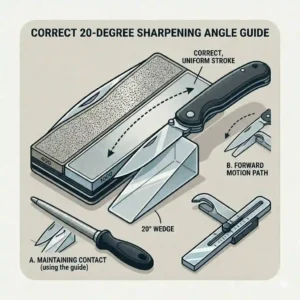
✅ Standard Western chef knives typically use a 20-degree angle per side. Japanese knives often use 15 degrees. Pocket knives and outdoor blades range from 25 to 30 degrees for durability. Use the “Sharpie trick” to match your factory angle…
❓ Can I sharpen ceramic knives with diamond tools?
✅ Yes. In fact, diamond is the only abrasive hard enough to sharpen a ceramic knife. However, ceramic is exceptionally brittle. You must use a guided system or have perfectly steady hands, as lateral torque will snap the blade…
Recommended for You
- 5 Best knife lanyard beads of 2026: Epic EDC Upgrades
- Kydex Sheath Clip: 7 Best Rugged Mounts for Your Gear in 2026
- 5 Best knife lanyard beads of 2026: Epic EDC Upgrades
Disclaimer: This article contains affiliate links. As an Amazon Associate, I earn from qualifying purchases. If you purchase products through these links, we may earn a small commission at no additional cost to you.
✨ Found this helpful? Share it with your friends! 💬🤗
[addtoany]
