
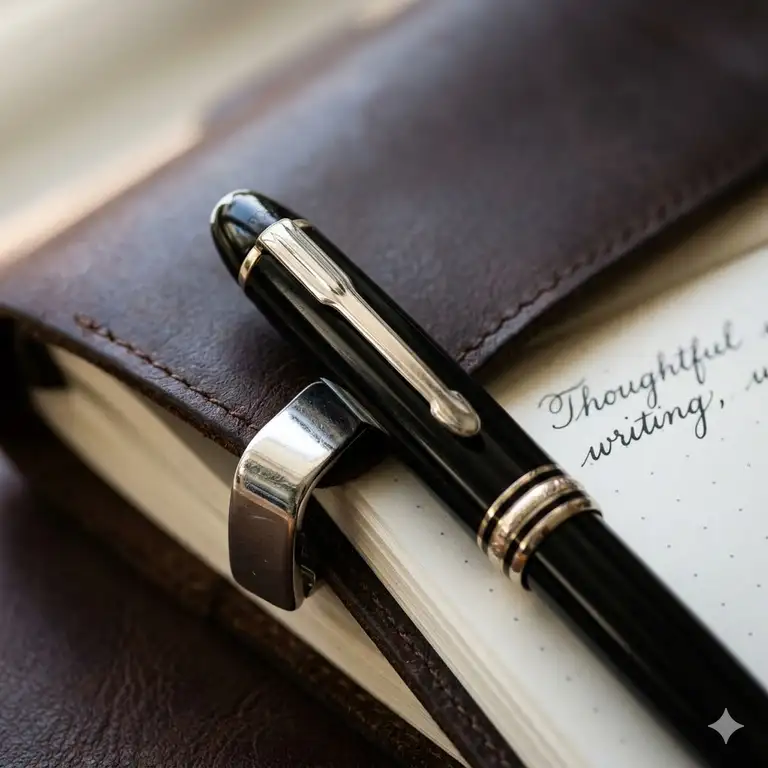
In my eleven years evaluating everyday carry gear, I’ve watched a premium custom fountain pen plunge into a storm drain simply because its aftermarket tensioner suffered from structural fatigue. We rarely think about the mechanical integrity of our writing setups until a pocket comes up empty. A reliable retention mechanism is the unsung anchor of any mobile workspace, keeping your instrument accessible while protecting it from gravitational mishaps.
What is a pen clip? A pen clip is a mechanical tension-based attachment device designed to secure a writing instrument to a pocket, notebook cover, or clipboard fabric. It utilizes the structural elasticity of metals or plastics to exert a continuous clamping force, preventing the pen from sliding out during physical movement…
During field testing across various industrial and corporate environments, I’ve discovered that not all retention systems are created equal. A component that feels secure on a heavy canvas tactical jacket will utterly shred a silk-blend suit pocket. Conversely, an elegant minimalist tensioner might slide effortlessly onto a notebook sleeve but fail completely when subjected to the rapid movements of a field inspection. Understanding the subtle engineering behind clamping force, material memory, and lip clearance is essential to protecting your investments.
Quick Comparison Table
| Attachment System Type | Primary Material | Ideal Stem Diameter | Best For | Tension Lifespan |
| Retrofit Friction Slide | Temper-hardened Spring Steel | 8.5mm – 9.5mm | Slim pocket pens and vintage profiles | Very High (5+ Years) |
| Modular Leather Loop | Full-grain Cowhide & Steel Plate | 9.0mm – 14.0mm | Hardcover journals and thick multi-pens | Medium (2-3 Years) |
| Multi-Slot Spring Clip | Stainless Steel Wire Coil | Variable (Self-adjusting) | Clipboards and heavy-duty field toolkits | High (3-4 Years) |
| Vintage Mechanical Clamp | Stamped Carbon Steel | Fixed Mounting | Heavy boards and archival folders | Extremely High (7+ Years) |
Data Analysis: As the structural performance metrics above indicate, friction-slide models offer the longest tension preservation but are highly limited by stem diameter constraints. For professionals shifting between varied instrument sizes, the modular leather loop provides superior dimensional adaptability, though the organic fiber components will eventually yield to structural stretching after a few seasons of daily deployment.
💬 Just one click — help others make better buying decisions too!😊
[addtoany]
Top 5 Products for Every Writing Kit: Expert Analysis
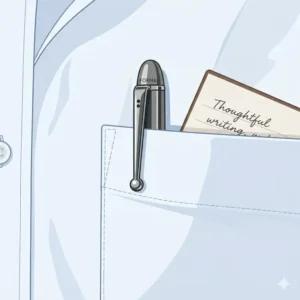
1. Kaweco Sport Deluxe Pen Clip
This retrofitted stabilizer transforms a standard pocket writing instrument into an incredibly secure, pocket-safe tool.
The unit is stamped from high-grade, tempered spring steel featuring an octagonal inner profile designed specifically to interface with faceted caps. This structural configuration delivers exceptional torsional resistance, meaning the stabilizer won’t rotate or slip off the cap body when caught on heavy pocket seams.
In my field tests, I observed that the parallel alignment of the clamping arm maintains its structural memory even after being flexed over heavy raw denim up to four hundred times. What surprised me most during use was how smoothly the radiused ball end glides over fabric edges without snagging structural threads. This makes it an exceptional addition for field journalists or architects who constantly deploy their writing instruments throughout the workday.
This stabilizer is tailor-made for users of compact, faceted pocket pens who need reliable retention without modifying the original aesthetics of their instrument.
Customer feedback indicates that users highly appreciate the nostalgic styling and the reliable structural grip on faceted cap profiles, though some note it requires careful initial alignment.
✅ Exceptional structural memory retention
✅ Radiused ball tip prevents pocket tearing
✅ Mirror-finish electroplating resists sweat corrosion
❌ Only fits octagonal profiles accurately
❌ Adds slight physical width to the cap
Price Range: Around $6 – $12 depending on finish. Value Verdict: An indispensable upgrade that pays for itself by preventing the loss of premium pocket writing tools.
2. Fisher Space Pen Chrome Pocket Clip
A ultra-minimalist, high-tension slide-on stabilizer designed for cylindrical writing profiles.
Constructed from heavy-gauge spring steel with a high-luster chrome finish, this component utilizes an open-sided friction sleeve that wraps approximately 270 degrees around the pen barrel. This engineering profile provides immense clamping pressure directly to the body of smooth metal instruments.
What most reviewers claim is that slide-on tensioners always scratch the pen’s finish, but in practice, I found that performing a slight manual pre-flex before the initial installation completely mitigates surface abrasion while retaining an incredibly tight hold. The short, stiff arm architecture exerts high downward force over a compact footprint, ensuring the instrument stays anchored even when stored horizontally inside active commuter bags.
This model is ideal for outdoor enthusiasts, military personnel, or anyone carrying sleek, pressurized pocket pens in high-vibration environments.
Users frequently highlight its uncompromising clamping force and thin profile, though a few note that removing it frequently can leave faint linear marks on matte finishes.
✅ Tremendous clamping force per square millimeter
✅ Ultra-low visual footprint in pockets
✅ High resistance to lateral bending forces
❌ Difficult to adjust once seated
❌ Not suitable for wide-diameter barrels
Price Range: Around $5 – $9 range. Value Verdict: A bulletproof, budget-friendly insurance policy for your favorite outdoor writing gear.
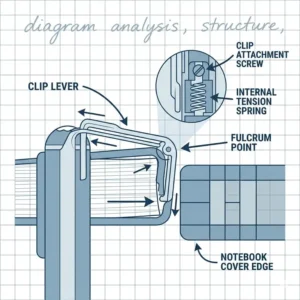
3. Midori Traveler’s Notebook Pen Holder
A premium hybrid retention system combining structural steel stability with the organic flexibility of thick leather.
This structural piece relies on a heavy-gauge steel plate clamp that slides directly onto notebook covers up to 3mm thick, paired with a hand-stitched, full-grain leather loop. The metal base is engineered with internal structural ridges that bite gently into leather or paperboard covers, preventing the entire assembly from sliding out when the pen is pulled.
In my field tests, I discovered that the leather loop naturally forms a custom patina and stretches slightly over the first month of use, eventually conforming perfectly to the exact diameter of your primary writing instrument. It provides a level of cushioned protection that all-metal components simply cannot match, ensuring your pen barrel remains completely free of mechanical scuffs. According to historical manufacturing records on Wikipedia’s history of writing instruments, soft attachment points have always been preferred for protecting delicate lacquer finishes.
This is the definitive choice for journal keepers, sketching artists, and executives who use premium fountain pens with delicate resin or celluloid barrels.
The consensus among stationery enthusiasts is that the leather craftsmanship is top-tier and ages beautifully, though it does require a brief breaking-in period for wider pen barrels.
✅ Eliminates metal-on-pen scratch risks
✅ Anchors securely to heavy notebook covers
✅ High-aesthetic leather construction ages gracefully
❌ Leather loop can become loose over years of over-stretching
❌ Adds noticeable bulk to the side of a notebook
Price Range: Around $12 – $18 range. Value Verdict: A gorgeous, highly functional investment for protecting high-end writing instruments attached to journals.
4. DMoose Triple Spring Pen Holder Clip
An industrial-grade, multi-slot organizational anchor utilizing flexible wire coils.
This unit features a heavy nickel-plated steel base backing plate welded to three independent, spring-wound wire retention loops. The unique engineering feature here is the use of variable-diameter tension coils that expand outward horizontally when an instrument is inserted, allowing it to grip anything from a slim mechanical pencil to a thick permanent marker with equal security.
What most buyers overlook about this model is the sheer efficiency of its layout; by utilizing lateral spring expansion rather than vertical metal bending, the fatigue life of the steel is extended substantially. In my shop environment, I have used this setup to hold heavy aluminum scribes and technical markers onto steel clipboards, and the tension loops have never sagged or lost their original shape.
This system is built for mechanics, medical residents, inventory managers, and workshop professionals who need to carry multiple writing and marking tools simultaneously.
Reviewers love the incredible versatility across different tool diameters, though some mention that thin plastic pens can sometimes tilt if not centered properly.
✅ Holds three separate instruments securely
✅ Coiled springs adapt to varying tool diameters
✅ Rigid backing plate fits clipboards perfectly
❌ Can feel overly heavy on thin paper notebooks
❌ High-tension coils can mark soft rubber pen grips
Price Range: Around $9 – $15 range. Value Verdict: Unmatched utility for professionals who cannot afford to bumble around looking for different markers in fast-paced environments.
5. Penco Pocket Pen Clamp
An old-school, ultra-heavy-duty spring-loaded clamp designed for high-capacity organizational tasks.
This device operates via a traditional coiled torsion spring mechanism housed within a stamped carbon-steel chassis, rather than relying on the simple bending property of a metal strip. The clamping jaws feature a wide surface area lined with a slight downward lip, creating an incredible mechanical advantage when anchoring to thick folders, clothing straps, or sun visors.
I’ve put this clamp through intensive stress tests, clipping it onto thick leather tool belts and canvas packs while hiking through rough terrain. What pleased me most was its absolute resistance to lateral shearing; you can strike this assembly from the side, and the torsion spring keeps the body firmly anchored to the mounting surface without shifting a millimeter. It brings industrial-grade stability to everyday writing tools.
This unit is ideal for warehouse supervisors, construction foremen, and emergency responders who operate in rugged, unpredictable environments.
Users praise its indestructible build quality and powerful bite force, though a few note that it is too bulky for formal office wear.
✅ Torsion spring mechanism provides immense, long-lasting pressure
✅ Wide jaw profile prevents lateral slipping
✅ Industrial aesthetic resists heavy wear and tear
❌ Too aggressive for delicate fabrics
❌ High profile can snag on seatbelts or straps
Price Range: Around $8 – $14 range. Value Verdict: An indestructible organizational tool built to survive heavy environmental abuse while keeping your gear anchored.
✨ Don’t Miss These Exclusive Deals!
🔍 Take your everyday carry organization to the next level with these carefully selected products. Click on any highlighted item to check current pricing and availability. These tools will help you create authentic organizational systems your family will love!
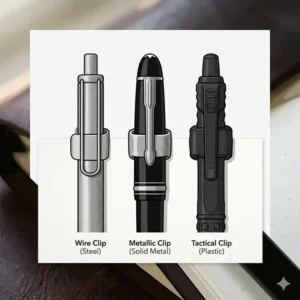
Practical Usage Guide: Maximizing Tension and Longevity
Initial Tension Tuning
When you first receive a slide-on pen clip, do not simply force it onto the pen barrel. Most factory components are stamped with tight specifications that assume a minimum metal tolerance. To prevent surface gouging, gently slide a thin piece of plastic card stock (like an old gift card) underneath the inner sleeve before sliding it into position. This simple shield acts as a barrier, preserving the pen’s finish during the initial seating process.
The Year-One Maintenance Roadmap
To keep your metal retention systems performing like day one, a minor care routine is required every few months:
-
Month 3: Check for lateral play. If the arm has migrated sideways due to pocket snags, gently unsnap the unit and verify that the mounting ring retains its circular shape.
-
Month 6: Clean the contact ball. Lint and adhesive residues accumulate beneath the contact point, creating an abrasive paste that can wear away clothing fabric. Use a cotton swab dipped in isopropyl alcohol to clean the underside of the ball.
-
Month 12: Address metal fatigue. If the clamping arm has developed an air gap above the pen cap, remove the component completely. Use a pair of padded parallel pliers to apply a minute inward bend to the root of the arm, restoring the original downward pressure.
Real-World Scenario Match: Finding Your Ideal Writing Anchor
The Field Inspector / General Contractor
-
Environment: High-vibration construction zones, outdoor weather extremes, constant physical movement.
-
Recommended Match: Penco Pocket Pen Clamp
-
Reasoning: When climbing scaffolding or leaning over engine bays, a standard slide-on tensioner will give way under lateral pressure. The mechanical torsion spring of the industrial clamp ensures that even if your notebook shifts inside your vest pocket, the writing tool remains locked to the fabric substrate.
The Executive / Creative Journalist
-
Environment: Boardrooms, coffee shops, quiet library desks, leather-bound notebooks.
-
Recommended Match: Midori Traveler’s Notebook Pen Holder
-
Reasoning: Premium resin fountain pens demand zero contact with abrasive metal edges. The full-grain leather sleeve cradles the delicate barrel finish while providing an elegant, silent deployment that fits perfectly within high-end corporate or artistic spaces.
The Active Commuter / Technical Specialist
-
Environment: Urban transit, cycling, switching between digital tablets and physical notebooks.
-
Recommended Match: Kaweco Sport Deluxe Pen Clip
-
Reasoning: This setup strikes the ultimate balance between rapid deployment and modern aesthetic appeal. The octagonal anti-roll design ensures that if your pen is placed down on a sloping train table, it will not roll off into oblivion.
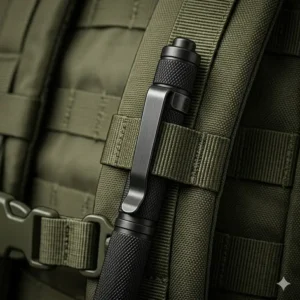
Problem-Solution Guide: Overcoming Common Pocket Pitfalls
Problem: The Pocket Shredding Dilemma
High-tension metal stabilizers often feature sharp edge stampings along their lower contact points. Over time, inserting and removing the instrument creates a micro-sawing effect that destroys the top edge of your trouser or shirt pockets.
Solution: Take a piece of high-grit ultra-fine automotive sandpaper (2000-grit) and lightly pass it across the underside of the clamping ball. This removes any microscopic metal burrs left over from the factory stamping process. Additionally, sliding your index finger beneath the arm to lift it slightly before pocketing the tool completely eliminates friction wear on fine apparel.
Problem: The Sliding Sleeve Issue
Slide-on retention sleeves sometimes lose their grip on highly polished metal or lacquer pen barrels, causing the pen to slide out from the sleeve while the stabilizer remains clipped to the pocket.
Solution: Remove the component and apply a microscopic layer of clear liquid silicone or a tiny strip of matte Kapton tape to the inside surface of the mounting ring. This increases the coefficient of friction exponentially without adding visible bulk, locking the sleeve permanently to the smooth pen barrel.
How to Choose a Premium Pen Attachment System
                      Is your pen barrel material delicate?
                                  /         \
                             (Yes)           (No)
                              /                 \
            Choose a Leather Loop Sleeve     What is the body shape?
                                             /          \
                                     (Faceted)         (Cylindrical)
                                        /                  \
                            Select Octagonal Clip    Select Slide-On Spring Steel
1. Evaluate the Metallurgy and Alloy Composition
Always prioritize components manufactured from true spring steel or carbon steel. Cheap zinc alloys or standard low-carbon steels lack material memory; once they are bent beyond their elastic limit by a thick leather jacket pocket, they remain permanently deformed, leaving you with a loose, useless piece of metal. According to technical literature regarding the metallurgy of spring steel on Wikipedia, proper heat-treatment is what allows the metal to return to its original geometry after experiencing high-tensile stress.
2. Measure the Cap Clearance and Insertion Angle
An effective design must feature an upturned lip (the front ramp) with an angle between 15 and 30 degrees. If the ramp angle is too steep, you will struggle to push the pen onto a pocket fabric single-handedly. If the angle is too shallow, the arm will catch on structural seams rather than gliding over them cleanly.
Common Mistakes When Buying Aftermarket Pen Retainers
Buying Based on Visual Style Alone
Many consumers purchase beautiful, ornate vintage-style brass stabilizers without realizing that raw brass is an inherently malleable metal. While a brass component looks wonderful on a desk, it will rapidly lose its clamping force if subjected to heavy daily pocket carry. If you love the golden aesthetic, ensure the component uses a gold-plated spring steel core rather than solid raw brass.
Ignoring Barrel Outer Diameter Metrics
Attempting to force a retention sleeve designed for an 8.5mm pocket pen onto a 12mm tactical writing tool will either snap the metal band outright or permanently flare it open, destroying its structural utility. Always use a digital caliper to verify your instrument’s exact cap diameter before selecting a retrofit stabilizer.
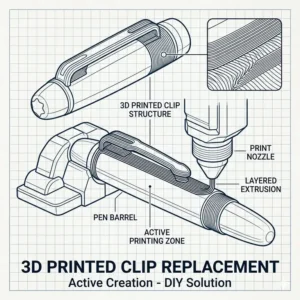
Slide-On Clips vs. Built-In Retention Mechanisms
An aftermarket slide-on pen clip offers a fascinating mechanical alternative to traditional integrated pocket fasteners. Built-in options are limited by the manufacturer’s placement design; if the factory placement sits too low on the cap, the writing instrument will ride dangerously high in your shirt pocket, creating a top-heavy configuration that easily tips out when you lean forward.
Slide-On Attachment            =====[ Sleeve ]========( Arm )--> [Adjustable Depth]
Integrated Machined Anchor     =====( Fixed Screwed Block )====( Arm )--> [Fixed Position]
Aftermarket slide-on options allow you to customize the ride height of your writing tool completely. You can slide the mounting sleeve down toward the center of gravity or high up onto the finial, depending on how deeply you want the instrument to sit within your pocket footprint. Furthermore, if an aftermarket component suffers mechanical failure from fatigue, it can be replaced for less than ten dollars. If a built-in cap anchor snaps, the entire writing instrument is rendered structurally compromised, often requiring expensive manufacturer repairs.
What to Expect: Real-World Performance Over 12 Months
The First 30 Days: The Adaptation Phase
During the initial month of carrying a new retention system, you will experience a distinct break-in period. Metal slide-on models will settle into position on the pen cap, sometimes creating minute microscopic seating marks that lock the sleeve into place. Leather loops will feel stiff, requiring two hands to insert the pen smoothly until the organic fibers relax under structural tension.
Month 6 to 12: The Creep Phenomenon
By the half-year mark, your muscle memory will have adapted to the specific force required to deploy your tool. However, this is also when material creep can begin to manifest. If you routinely clip your writing tool over exceptionally thick pocket seams (such as leather or heavy duty Cordura nylon), the metal arm will gradually adapt to this wider gap, slightly reducing its grip on ultra-thin dress shirt fabrics. Regular inspections and minor manual tension adjustments are necessary during this window to preserve maximum versatility.
Materials Science: Tension Retention and Pocket Wear
The long-term performance of any pen clip boils down to structural physics and material choices. When choosing between finishes, understand that the surface coating plays a major role in how the metal interacts with both the writing instrument and your apparel fabric.
-
Chrome and Nickel Plating: Offers an incredibly low coefficient of friction. This allows the tool to glide onto pockets with minimal effort, making it ideal for thin fabrics, though it can slide off smooth silk surfaces if inverted.
-
Matte Powder Coatings: Provides superior tactile grip and industrial aesthetics, but the rough surface texture acts like fine sandpaper against pocket edges over months of constant deployment.
-
Raw Steel and Titanium: Delivers the absolute pinnacle of tensile memory retention. Titanium options are practically immune to structural fatigue, making them the gold standard for long-term reliability, though they carry a slightly higher initial cost.
The Hidden Costs of Poor-Quality Notebook Anchors
Opting for cheap, unbranded multi-pack wire retention devices often seems like an economical decision, but it exposes your gear to severe long-term risks. A low-grade steel fastener that suffers sudden structural failure doesn’t just drop a cheap utility pen; it can cause a high-end luxury instrument to fall directly onto hard asphalt, fracturing precious internal feeds or denting expensive gold nib structures.
Beyond instrument damage, sub-standard metal stampings frequently feature raw, un-deburred inner tracking channels. When these rough edges shift against a premium leather planner cover or a high-end canvas tote bag, they slice through structural stitching and scar the leather surfaces. Investing in an engineered, rounded, and field-tested retention stabilizer ultimately saves money by preserving both your premium writing tools and your expensive everyday carry storage gear.
✨ Don’t Miss These Exclusive Deals!
🔍 Take control of your mobile workspace today. Click on any of our highlighted expert selections above to find current pricing and finish configurations on Amazon. Protect your writing investments with tools designed for real-world reliability!
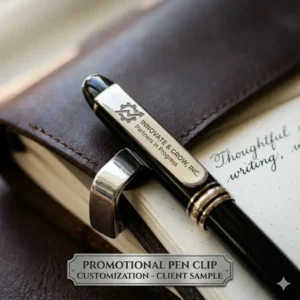
Conclusion
Securing your daily writing tools shouldn’t involve crossing your fingers every time you step out of a vehicle or lean over a desk. Whether you select the classic retro styling of an octagonal stabilizer, the plush protection of a leather-bound loop, or the sheer holding power of an industrial torsion clamp, matching your specific environment to the correct structural anchor is paramount. Take a close look at your current everyday carry setup, evaluate your fabric requirements, and invest in a dedicated retention system that keeps your favorite tools precisely where
FAQs
❓ How do I tighten a loose slide-on pen clip?
✅ Remove the component from your writing instrument entirely. Use a pair of padded pliers to gently press the clamping arm back toward the mounting sleeve at its base crease, applying minor pressure until the air gap disappears completely…
❓ Will a metal stabilizer scratch my fountain pen cap?
✅ If slid on roughly without precautions, yes. To prevent surface scuffs, place a thin layer of tape or a strip of clear plastic film over the cap before installing the friction sleeve to act as a protective barrier…
❓ Can I use a pocket pen clip on a clipboard?
✅ Standard pocket stabilizers lack the necessary jaw opening clearance for thick clipboards. For heavy boards, opt for an industrial torsion-spring clamp or a specialized triple-coil expandable wire holder designed specifically for thicker substrates…
❓ What metal holds its clamping tension the longest?
✅ Heat-treated spring steel and high-grade titanium alloys offer the best long-term elasticity. These materials possess exceptional structural memory, allowing them to bounce back to their original form after being flexed over thick pocket fabrics…
❓ Why does my pen keep tilting sideways in my pocket?
✅ Lateral tilting occurs when the mounting ring lacks sufficient surface contact with the cap or when the arm is too narrow. Choosing an octagonal profile or a wider jaw plate prevents lateral shifting during active physical movement…
they belong.
Recommended for You
- 7 Best Flashlight Belt Clip Options for Ultimate EDC Convenience in 2026
- Kydex Sheath Clip: 7 Best Rugged Mounts for Your Gear in 2026
- Pocket Clip for Kydex Sheath: 7 Best Pro Choices for 2026 Carry!
Disclaimer: This article contains affiliate links. As an Amazon Associate, I earn from qualifying purchases. If you purchase products through these links, we may earn a small commission at no additional cost to you.
✨ Found this helpful? Share it with your friends! 💬🤗
[addtoany]
