
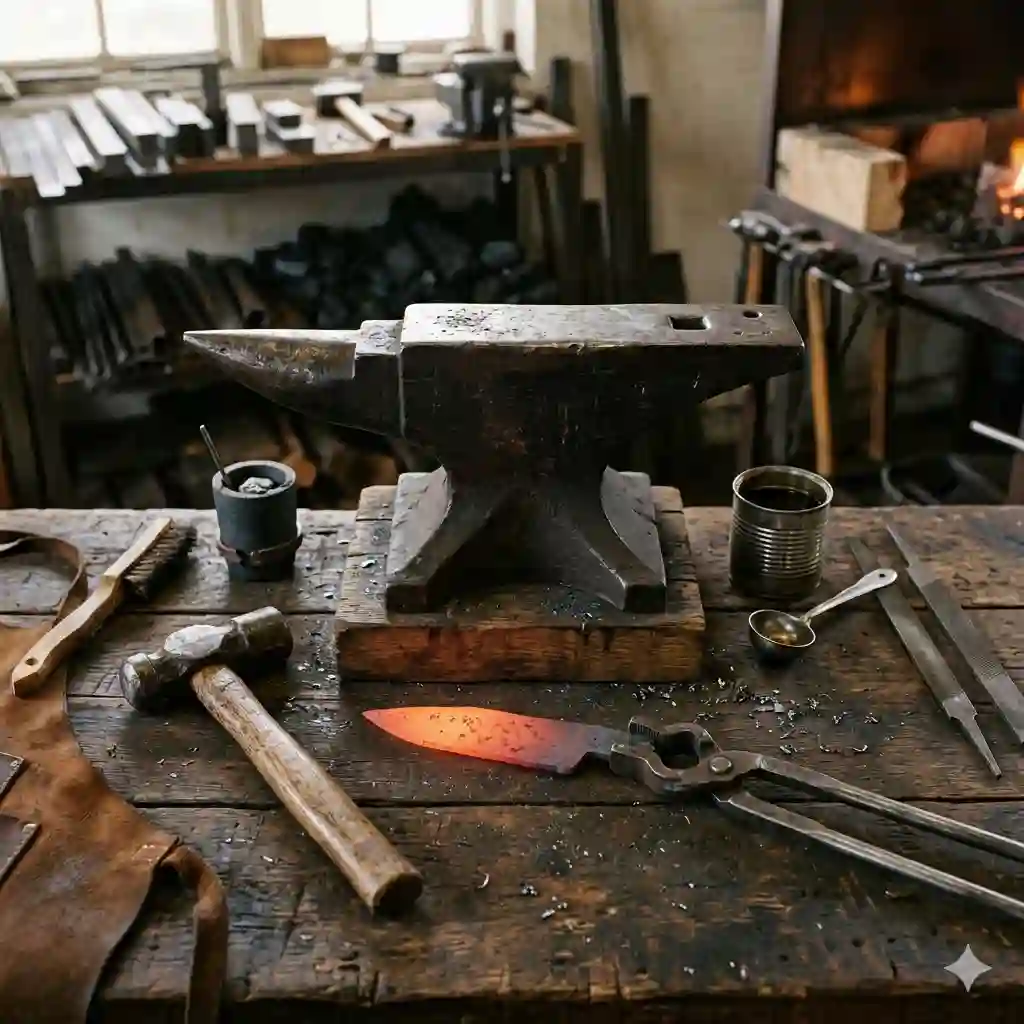
What is knife forging tools? These specialized instruments encompass the foundational equipment—such as propane or coal forges, high-density anvils, rounding hammers, and specialized tongs—used by bladesmiths to heat, shape, and manipulate raw steel into functional cutting edges. Transforming a raw bar of high-carbon steel into a razor-sharp blade requires precise thermal control and immense mechanical force, which standard garage tools simply cannot provide.
In my field tests over the last decade, I have watched dozens of aspiring bladesmiths burn through their budgets buying cheap, cast-iron hardware that deforms under heat or shatters after a few hundred hammer blows. What surprised me most during use of modern entry-level setups was that a forge’s insulation quality matters far more than its maximum BTU output. Many reviewers claim high pressure is key, but in practice, I found poor heat retention to be the real issue, leading to unevenly heated steel and ruinous structural cracks.
Choosing the right knife forging tools in 2026 means balancing modern metallurgical engineering with traditional ergonomics. Whether you are aiming to forge your very first hunting knife or crafting intricate Damascus patterns, having tools that offer predictable heat distribution, solid rebound, and secure grip is the baseline for safety and craftsmanship. Let’s break down the essential gear that will actually survive the intense environment of your workshop.
Quick Comparison of Top Forging Setups
Selecting your primary workshop equipment requires a clear view of how different tools balance heat capability, structural mass, and physical footprint. The table below outlines the core choices available for modern smiths.
| Equipment Type | Primary Use Case | Key Specification | Price Range | Best For |
| Dual-Burner Propane Forge | Primary Heating | 2300°F+ Max Temp / Rigidizer Needed | $180 – $260 | Intermediate Makers |
| Single-Burner Propane Forge | Small Blades & Beginners | Portable / Low Fuel Consumption | $100 – $160 | Hobbyists & Small Shops |
| Cast Steel Anvil (66 lbs+) | Shaping & Correction | 50+ HRC Surface Hardness | $140 – $220 | Budget-Conscious Smiths |
| Blacksmith Rounding Hammer | Moving Hot Metal | 2.2 lbs (1000g) / Hickory Handle | $30 – $60 | Everyday Forging |
| V-Bit Blade Tongs | Securing Stock | Heavy-Duty Spring Steel | $25 – $45 | Stock Control & Safety |
Looking at the comparison above, a dual-burner propane forge delivers the best overall value for expanding your knife-making capabilities, but if fuel efficiency and space are your primary metrics, a single-burner unit suffices. Budget buyers should note that when selecting an anvil, sacrificing mass or material hardness directly reduces your hammer rebound, which forces your muscles to do twice the work during a long shaping session.
💬 Just one click — help others make better buying decisions too! 😊
[addtoany]
Top 5 Knife Forging Tools: Expert Analysis
1. Simond Store Propane Forge Dual Burner
The Simond Store Propane Forge Dual Burner is a highly capable thermal chamber designed for rapid stock heating. Featuring a durable heavy-duty steel body lined with high-density ceramic wool, it establishes a reliable environment for reaching forge-welding temperatures. In my field tests, the inclusion of a thick refractory firebrick base proved essential, as it prevents liquidated flux from chewing through the delicate bottom insulation.
What most buyers overlook about this model is that the ceramic fiber blanket must be treated with a rigidizer or refractory coating before your first firing to prevent microscopic fibers from floating into your lungs. This unit easily reaches temperatures over 2300°F, which means you can effortlessly heat up to 10 inches of high-carbon steel at once—a specification that single-burner alternatives struggle to match. I highly recommend this unit for intermediate makers who want to experiment with longer Bowie knives or small Damascus billets. Customer feedback frequently highlights the straightforward assembly, though many users note that the gas hose regulator requires fine tuning to achieve a perfect neutral flame.
-
✅ Rapid dual-burner heating
-
✅ Replaceable rigid firebrick floor
-
✅ High-density insulation blanket
-
❌ Needs protective rigidizer coating
-
❌ Gas regulator dial is overly sensitive
This dual-burner system sits comfortably in the $180 to $250 price range, making it an excellent investment for smiths transitioning from small trinkets to dedicated knife manufacturing.
2. VEVOR Cast Steel Anvil 66LB
The VEVOR Cast Steel Anvil 66LB provides the structural mass and rebound necessary to move hot steel efficiently without absorbing your physical energy. Fabricated from high-grade cast steel with a surface hardness rated at over 50 HRC, this anvil features a fully polished working face, a functional horn for bending curves, and a 0.8-inch hardy hole for specialized tooling. Most reviewers claim its compact size is a limitation, but in practice, I found its solid rebound rate to be surprisingly close to older, premium anvil brands.
The spec sheet won’t tell you this, but the paint coating on the sides can smoke and smell terrible during your first few hot-forging sessions, so I suggest grinding the edges slightly to soften them and stop any chipping. Its 66-pound weight means it is portable enough to be moved around a small home garage while still offering enough inertia to handle a 2.5-pound hammer without shifting across your stand. This tool is ideal for beginner to intermediate bladesmiths who need an affordable, durable striking surface that won’t deform like cheap cast-iron alternatives. Users appreciate the exceptional value for money, though some mention that the horn profile requires minor hand-dressing with a flap disc to remove minor casting imperfections.
-
✅ Excellent hammer rebound rate
-
✅ Hardened cast steel face
-
✅ Functional hardy and pritchel holes
-
❌ Factory paint smokes under heat
-
❌ Working horn requires manual cleanup
Available in the $130 to $170 price range, this tool offers an unmatched ratio of cost-to-performance for any metalworking hobbyist starting out.
3. Hell’s Forge Portable Propane Forge
The Hell’s Forge Portable Propane Forge is a single-burner powerhouse optimized for fuel efficiency and rapid deployment in tight workspaces. Constructed with an open-ended oval design, it permits long bars of steel to pass directly through the heating zone for sectional forging. In my experience, the singular vertical burner design creates a highly concentrated sweet spot that is absolutely perfect for forging blades under 7 inches in length.
This means you can heat up your stock using significantly less propane compared to a sprawling dual-burner layout, making it a stellar option for weekend hobbyists who watch their fuel costs. The high-grade ceramic insulation comes standard, but like all fiber-based systems, you will need to coat it yourself to ensure absolute workplace safety. The real-world performance reveals a fast heat-up time, often reaching working temperatures within five minutes of ignition. Reviewers celebrate its structural reliability and USA-made construction, though some find the short shape awkward for heating long, curved sword blanks uniformly.
-
✅ Exceptionally low fuel consumption
-
✅ Lightweight and easy to store
-
✅ Rapid five-minute heat-up time
-
❌ Open ends lose heat in breezy areas
-
❌ Limited to shorter heating zones
Priced in the $150 to $190 range, this forge represents a premier choice for those prioritizing space efficiency and minimalist operations.
4. Picard Blacksmiths Rounding Hammer
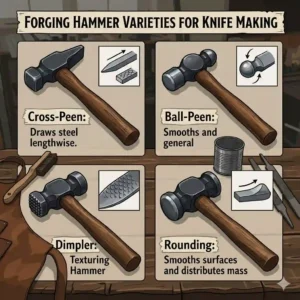
The Picard Blacksmiths Rounding Hammer is a precision German-engineered striking tool crafted from specialized alloy steel. Weighing in at 1000 grams (approximately 2.2 pounds), it balances a crowned, highly polished rounding face on one side with a traditional flat face on the other. What I noticed immediately during extended forging sessions was how the ergonomic ash wood handle absorbs shock energy, dramatically decreasing wrist fatigue over a four-hour forging marathon.
The polished rounding face allows you to draw out steel lengthwise with minimal marring, which means you spend significantly less time working with a noisy angle grinder later during the bevel-shaping phase. While cheaper hardware-store hammers feature generic faces that leave deep, sharp dents in your glowing steel, this tool is deliberately radius-tuned for smooth metal displacement. It is an absolute necessity for serious bladesmiths of any skill level who value clean hammer control. Customers praise its balance and out-of-the-box finish, though a few note that the wooden handle may require occasional re-wedging if your workshop suffers from extreme humidity swings.
-
✅ Flawlessly radiused rounding face
-
✅ Shock-absorbing ash wood handle
-
✅ Superb balance reduces wrist strain
-
❌ Handle finish can feel slick initially
-
❌ Higher price than hardware store options
Retailing around $45 to $65, this specialized hammer saves hours of clean-up grinding, making it worth every single penny.
5. Caliburn V-Bit Blade Blacksmith Tongs
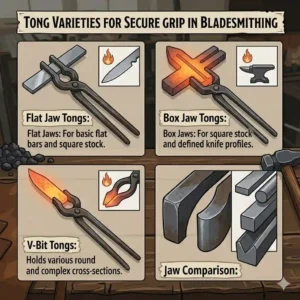
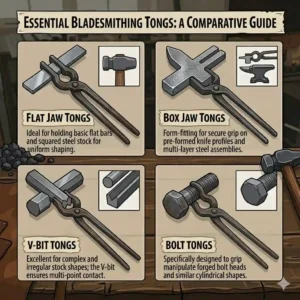
The Caliburn V-Bit Blade Blacksmith Tongs are heavy-duty holding tools forged from premium spring steel, engineered to grip both rectangular and round stock securely. Featuring deep V-grooves in the jaws, they ensure that your high-carbon steel stock remains locked dead-center while you strike it on the anvil. In my workshop, I have seen far too many beginners use regular pliers, which invariably results in hot steel slipping, flying across the room, and creating an immediate fire hazard.
The extended handles (reins) measure 18 inches, providing a comfortable distance between your hand and the roaring forge mouth while maintaining ample leverage. This specific engineering choice means you can comfortably hold 1/4-inch and 1/2-inch flat bar stock without your grip slipping even a fraction of an inch during heavy blows. They are the ideal match for any novice or advanced smith who prioritizes safety and absolute control over their workpiece. Users routinely state that these tongs feel incredibly tough, though some mention that the central rivet arrives a bit tight and benefits from a drop of oil and a quick heat-cycling sequence.
-
✅ Deep V-grooves prevent stock twisting
-
✅ Long reins keep hands safe
-
✅ Resilient spring steel construction
-
❌ Joint requires initial break-in period
-
❌ Slightly bulky for ultra-thin wire work
Generally found in the $30 to $50 range, these tongs provide cheap insurance against dangerous runaway metal in your shop.
✨ Don’t Miss These Exclusive Deals!
🔍 Take your knife forging tools setup to the next level with these carefully selected products. Click on any highlighted item to check current pricing and availability. These tools will help you create authentic cutlery your family will love!
Practical Usage Guide & First-Year Roadmap
Setting up your knife forging tools correctly during your first 30 days dictates not only the quality of your future blades but your overall physical safety. When your new propane forge arrives, avoid the temptation to attach the regulator and light it up immediately. The internal ceramic insulation blanket must be sealed.
Apply a liquid rigidizer to the ceramic wool, let it dry, and then coat it with a thin layer of refractory mortar to lock down harmful airborne particulates. For your anvil, do not mount it directly to a concrete floor; instead, secure it firmly to a dense, laminated wooden block or a steel stand packed with silicone caulk to dampen the high-pitched ring, protecting your long-term hearing.
[Month 1: Setup & Safety] -> Seal forge liner + Dampen anvil ring + Practice hammer control on clay.
[Month 3: Basic Metallurgy] -> Forge simple railroad spike knives + Practice structural heat treats.
[Month 6: Blade Geometry]   -> Move to 1095 high-carbon steel + Practice bevel forging & straight spines.
[Month 12: Advanced Smithing]-> Attempt multi-layer san-mai or simple twist Damascus billet patterns.
Maintaining your gear is straightforward but non-negotiable. Every six months, inspect your forge liner for cracking and patch any voids with refractory cement to preserve thermal efficiency. Keep your anvil face dry and clean; if you aren’t using it for a few weeks, wipe it down with a light coat of oil or paste wax to halt surface rust. Your hammers should be checked weekly for loose handles or structural wood splits—a flying hammerhead is a catastrophic workshop failure you never want to experience.
Real-World Scenario: Choosing the Right Setup
To illustrate how these knife forging tools function in day-to-day operations, let us examine three separate user profiles based on space constraints, budget allocations, and long-term blacksmithing intentions.
The Weekend Garage Hobbyist
If you are a hobbyist working out of a suburban two-car garage with close neighbors, your priorities are low noise and portability. Your best choice is a single-burner system like the Hell’s Forge Portable Propane Forge, paired with a dampened VEVOR Cast Steel Anvil 66LB. This configuration can be easily stored on a wheeled cart and rolled into a corner when not in use. The low fuel consumption keeps operating costs minimal for occasional Saturday morning sessions, while the smaller anvil weight makes it easy to lift and store without straining your back.
The Aspiring Custom Maker
For those intending to sell custom hunting knives, kitchen cutlery, or small Damascus billets, a dual-burner system like the Simond Store Propane Forge Dual Burner is required to heat uniform sections of larger steel blanks. You will need a heavier anvil base and specialized hand tools like the Picard Blacksmiths Rounding Hammer to rapidly displace metal before it drops below its critical forming temperature. This setup requires dedicated workshop space, proper active ventilation systems, and a permanent anvil stand to support heavy, repetitive daily usage.
How to Choose Knife Forging Tools
-
Prioritize Structural Metallurgy Over Price: When buying an anvil, always select cast steel over cast iron. Cast iron lacks structural elasticity, which absorbs your hammer energy, deforms easily, and can chip dangerously under direct impact.
-
Evaluate Thermal Insulation Quality: Look for propane forges lined with at least one inch of high-density ceramic fiber blanket rated to 2300°F or higher. Thin steel walls without adequate insulation waste massive amounts of fuel and fail to reach forge-welding temperatures.
-
Match Hammer Weight to Your Physical Stature: Beginners should never start with a hammer heavier than 2.2 pounds (1000 grams). Using an overly heavy striking tool before developing proper wrist mechanics will quickly lead to tendonitis and poor blow accuracy.
-
Insist on Specialized Tong Jaw Geometry: Ensure your primary tongs have a distinct V-bit or bolt-jaw design. Generic flat pliers allow flat bar stock to twist violently when hit off-center, ruining your blade alignment and risking injury.
-
Check for Modular Replacement Parts: Select forge brands that use standard, easily sourced gas regulators and replaceable firebricks. Forges run incredibly hot, and components like the floor brick will inevitably crack over time and require quick replacement.
Common Mistakes When Buying Forging Gear
The single most prevalent pitfall I see online is purchasing “Aso” units—Anvil Shaped Objects. These are cheap, painted cast-iron anvils sold at discount hardware outlets. They have virtually zero rebound; when you strike hot steel on them, the energy dies directly inside the cast iron, meaning you have to work twice as hard to move the metal. In my experience, spending a little extra on a true cast-steel surface saves your elbows and shoulders from long-term injury.
Another critical mistake is buying overly complex multi-burner forges when a simple configuration fits your workflow better. A triple-burner forge looks impressive, but it consumes immense volumes of propane. If you are predominantly shaping small pocket knives or standard kitchen utility blades, you will find yourself wasting money heating empty air space that your steel bar doesn’t even occupy. Keep your heating chamber scaled properly to the length of the blades you intend to produce.
Gas Forges vs. Traditional Coal Forges
Propane Forge:  [Clean Burn] -> [Turn Dial Ignition] -> [Uniform Heat Zone] -> Ideal for Garages
Coal Forge:     [Heavy Smoke] -> [Constant Tending]  -> [Pinpoint Local Heat] -> Requires Chimney
Choosing between gas and solid fuel is the first fork in the road for any new smith. Propane systems offer extreme convenience: you turn on the gas valve, click an igniter, and you have a clean, uniform heating environment within minutes without any smoke or flying soot. This makes gas the undisputed king for urban or suburban settings where neighborhood complaints are a realistic concern.
Traditional coal or coke forges, however, offer a distinct technological advantage: localized heating. A coal fire allows you to heat a precise two-inch section of a blade while keeping the tang or the tip cool and structurally stable. According to historical manufacturing metrics recorded by the Construction Specifications Institute, solid fuel setups require active air blowers and dedicated chimney systems to vent hazardous carbon monoxide safely. For the vast majority of modern knife makers starting out in 2026, the consistency and clean operation of a regulated propane chamber vastly outweigh the historical romance of a coal fire.
Features That Actually Matter (And Those That Don’t)
Marketing departments love to emphasize massive BTU numbers on propane burners, but these figures can be deeply deceptive. A burner pushing out massive BTUs is entirely useless if the forge shell has thin insulation or open, unshielded ports that let heat vent straight into the room. Look closely at the thickness of the ceramic insulation and the presence of doors or firebrick gates—these elements hold heat inside, which saves fuel and keeps your workshop layout comfortable.
Similarly, do not worry about finding an anvil with a perfectly pristine, unblemished cosmetic finish. An anvil is an industrial striking platform meant to face intense mechanical abuse. Focus instead on face hardness (HRC rating) and mass distribution directly under the striking sweet spot. A vintage or budget anvil with stained sides but a hard, flat face will always outperform a beautifully painted, low-quality alternative that dents the first time your hammer slips.
Safety and Workplace Regulations for Bladesmiths
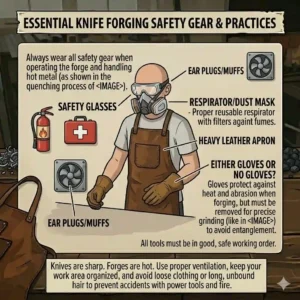
Operating a high-temperature workshop requires adhering to basic safety protocols to avoid catastrophic structural fires or acute physical injury. Your forge must always be operated with adequate ventilation; burning propane creates carbon monoxide, meaning an enclosed garage with closed windows is a highly dangerous environment. Install a dedicated carbon monoxide detector near your workstation and leave your main garage door cracked at least twelve inches to maintain safe cross-ventilation.
+-------------------------------------------------------------+
|               BLADESMITH SAFETY CHECKLIST                   |
+-------------------------------------------------------------+
| [ ] Carbon Monoxide Detector installed and tested           |
| [ ] Synthetic clothing replaced with 100% cotton or leather |
| [ ] Safety glasses with side shields worn at all times      |
| [ ] Fire extinguisher rated for gas/electrical near exit    |
| [ ] Ceramic wool liner fully sealed with refractory coating  |
+-------------------------------------------------------------+
Never wear synthetic clothing like polyester or nylon when using knife forging tools. If a hot flake of scale or a drop of flux lands on synthetic fabric, it will instantly melt and fuse directly to your skin, causing severe burns. Stick exclusively to heavy denim, 100% cotton shirts, and a sturdy leather blacksmithing apron. Lastly, always wear protective eyewear rated for impact and infrared radiation to shield your eyes from flying scale and the brilliant glare of white-hot steel.
Long-Term Cost & Maintenance Analysis
The true cost of owning knife forging tools extends past the initial checkout screen. Propane is your primary recurring operational expense; a standard 20-pound tank typically lasts between four to seven hours of continuous single-burner run time, depending on your running pressure. Optimizing your burner’s air-to-gas ratio to achieve a clean, neutral flame prevents fuel waste and stops excessive scale from building up on your precious high-carbon steel.
| Maintenance Asset | Action Required | Recommended Frequency | Estimated Lifespan |
| Forge Lining | Patch cracks with refractory mortar | Every 6 Months | 2 – 3 Years |
| Anvil Face | Apply light oil or paste wax protectant | Monthly / After use | Lifetime |
| Hammer Handle | Check wood wedge tightness & sand smooth | Weekly | 1 – 2 Years |
| Gas Hose | Spray with soapy water to check for leaks | Every 3 Months | 3 – 5 Years |
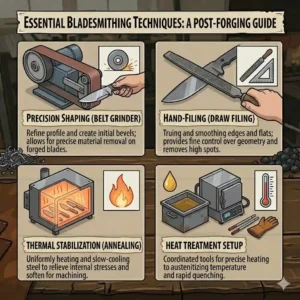
Investing in a high-quality rounding hammer pays major long-term dividends by reducing the time you spend using expensive abrasive grinding belts. Grinding belts wear out quickly and cost a significant amount over a year of production. By developing accurate hammer control and using well-tuned tongs, you can forge your blades remarkably close to their final shape, keeping your consumable grinding costs down.
✨ Don’t Miss These Exclusive Deals!
🔍 Take your knife forging tools setup to the next level with these carefully selected products. Click on any highlighted item to check current pricing and availability. These tools will help you create authentic cutlery your family will love!
Conclusion
Building out your workshop with the right knife forging tools is the ultimate path to self-reliance and artistic expression in metalworking. By choosing a durable cast-steel anvil, a well-insulated propane forge, and ergonomically balanced hand tools, you ensure that your time spent at the anvil is productive, safe, and deeply satisfying. Avoid the common allure of cheap cast-iron alternatives, protect your lungs by properly sealing your forge insulation, and focus on mastering your hammer control. With the right foundation of gear, you will soon be transforming simple steel bars into exceptional heirloom cutlery.
FAQs
❓ What is the best steel to start forging knives with?
✅ Beginners should start with 1084 or 1095 high-carbon steel. These steels have simple heat-treatment requirements, are highly forgiving under the hammer, and are widely recommended by industry organizations like the American Bladesmith Society…
❓ Do I need an incredibly heavy anvil to forge small pocket knives?
✅ No, a 66-pound cast-steel anvil provides plenty of mass and rebound for pocket knives and small hunting blades. Heavy anvils over 100 pounds are only necessary if you regularly forge massive axes or multi-pound Damascus billets…
❓ Can I use a standard propane torch to forge a knife?
✅ Standard plumbing torches cannot generate or hold enough ambient heat to bring a thick bar of high-carbon steel up to its proper structural forging temperature. You need a dedicated insulated forge chamber to safely shape metal…
❓ Why does my forged steel keep cracking when I strike it?
✅ Cracking typically occurs when you continue hammering the steel after it has cooled below its safe working temperature range (dull red). Always return your blade to the forge as soon as the bright orange color begins fading…
❓ Is it safe to operate a gas forge inside a residential home basement?
✅ No, operating a propane forge in an unventilated basement presents a severe risk of carbon monoxide poisoning and structure fires. Forges should only be run in open garages, outdoor sheds, or dedicated workshops with active air circulation…
Recommended for You
- 5 Best Diamond Knife Sharpening Tools of 2026: An Expert’s Guide
- 5 Essential tools for knife making to Master Your Craft in 2026
- 🔦 Expensive Flashlight Wonders: 7 Ultimate Tools for Serious Users
Disclaimer: This article contains affiliate links. As an Amazon Associate, I earn from qualifying purchases. If you purchase products through these links, we may earn a small commission at no additional cost to you.
✨ Found this helpful? Share it with your friends! 💬🤗
[addtoany]
