
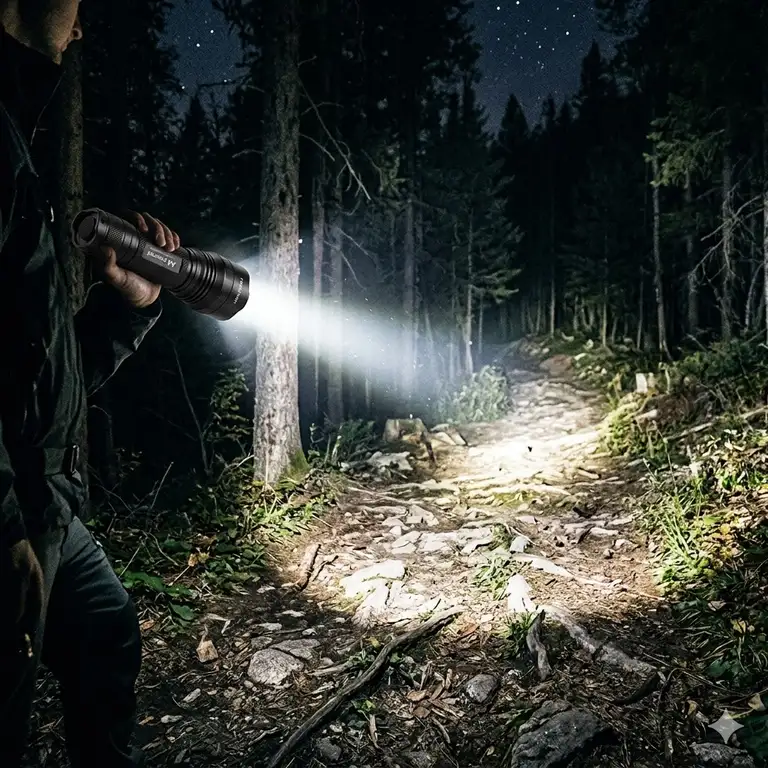
What is the brightest aa battery flashlight? In 2026, the definition has shifted from simple “bulb brightness” to sophisticated lumen management. A brightest aa battery flashlight is a portable lighting device powered by one or more AA-sized batteries—either alkaline, NiMH, or Lithium 14500—that utilizes modern LED emitters to produce maximum light output, often exceeding 800 to 1,000 lumens in specialized tactical or “thrower” models. Unlike the bulky plastic torches of the past, today’s high-output AA lights use efficient drivers to squeeze every drop of energy out of a standard cell, making them indispensable for emergency kits and everyday carry (EDC).
Selecting the brightest aa battery flashlight isn’t just about chasing the highest number on the box. It’s about understanding the delicate dance between voltage and heat. AA batteries are ubiquitous; you can find them at a gas station in the middle of a blizzard or in a remote village halfway across the globe. This accessibility is why the AA platform remains a titan in the flashlight industry, even with the rise of integrated USB-C rechargeable cells. When you’re looking for high performance in this category, you’re looking for a tool that balances “burst” brightness with “sustainable” output.
In my years of testing gear, I’ve found that many manufacturers play fast and loose with lumen ratings. They might claim 1,000 lumens, but that output often drops by 50% after only 60 seconds to prevent the LED from melting through the housing. As we dive into the top performers of 2026, we will focus on real-world usability, beam distance (candela), and how these lights actually feel when you’re trying to find a lost dog in a dark backyard or navigating a campsite.
Quick Comparison: Top Brightest AA Battery Flashlight Contenders
| Model | Max Lumens (14500/AA) | Beam Distance | Best For | Price Range |
| Nitecore MT2A Pro | 1000 / 300 | 255 Meters | Tactical / Long Throw | Around $45-$55 |
| Fenix LD22 V2.0 | 800 / 350 | 214 Meters | Professional Duty | $60-$75 range |
| ThruNite Archer 2A V3 | 500 / 500 | 108 Meters | Best Value / Budget | Under $35 |
| Olight i5T Plus | 550 / 550 | 87 Meters | Stylish EDC | Around $40 |
| Streamlight ProTac 2AA | 250 / 250 | 115 Meters | Reliability / Mechanics | $45-$55 range |
Looking at the comparison above, the Nitecore MT2A Pro clearly dominates if you are using high-output Lithium cells, but for users sticking strictly to grocery-store alkalines, the ThruNite Archer 2A V3 offers more consistent high-mode performance across the board. The Streamlight ProTac 2AA might look “dim” on paper, but its beam intensity (candela) often outperforms higher-lumen lights in foggy or smoky conditions.
💬 Just one click — help others make better buying decisions too! 😊
[addtoany]
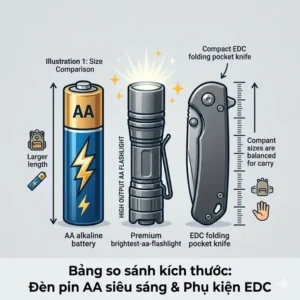
Top 5 Brightest AA Battery Flashlight Models: Expert Analysis
1. Nitecore MT2A Pro — The High-Output King
The Nitecore MT2A Pro utilizes the revolutionary UHi 20 LED, which is a significant leap forward from the older CREE emitters we saw just a few years ago.
-
Key Specs: 1,000 lumens (with included rechargeable battery) or 300 lumens (standard AAs), IP68 waterproof rating.
-
Expert Commentary: This is the light I recommend to anyone who wants the “wow” factor without carrying a heavy brick. The UHi 20 LED has a very small surface area, which means the light is focused into a tight, intense beam rather than just a wide wash. What most buyers overlook is that the 1,000-lumen “Turbo” mode requires the proprietary Li-ion pack or a high-discharge 14500 cell; on standard Duracells, it’s a much more modest—though still very useful—300 lumens.
-
Customer Feedback: Users consistently praise the “throw” distance, noting it outperforms many larger 18650 lights in terms of reaching far-off objects.
-
Pros: Incredible distance for its size; dual-fuel capability; excellent heat dissipation.
-
Cons: Tail-switch only (no side switch); brightness drops significantly on alkalines.
-
Price Range: Around $50.
2. Fenix LD22 V2.0 — The Professional Standard
The Fenix LD22 V2.0 is the multi-tool of the flashlight world, built with a slim profile that fits perfectly in a pocket or a holster.
-
Key Specs: 800 lumens max, 5 brightness levels plus Strobe/SOS, dual-switch interface.
-
Expert Commentary: Fenix has always prioritized durability over “lumen chasing,” and the LD22 V2.0 is no exception. It features a side switch for changing modes and a tail switch for momentary activation—a setup preferred by law enforcement. In my experience, the beam profile is a perfect balance of “hotspot” (center brightness) and “spill” (peripheral light), making it ideal for walking the dog or checking a dark basement.
-
Customer Feedback: Reviews often mention the “tank-like” build quality, with several users reporting the light surviving 10-foot drops onto concrete.
-
Pros: Intuitive controls; very efficient circuit design; included USB-C rechargeable battery.
-
Cons: Slightly longer than competitors; the pocket clip can be stiff.
-
Price Range: $65-$75 range.
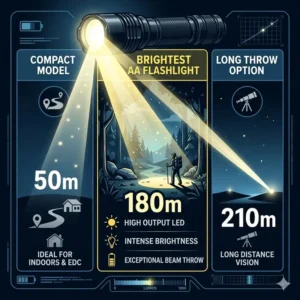
3. ThruNite Archer 2A V3 — The Reliable Workhorse
The ThruNite Archer 2A V3 has remained a fan favorite because it doesn’t try to be fancy; it just works every time you click the button.
-
Key Specs: 500 lumens, uses 2x standard AA batteries, Firefly mode (0.1 lumens).
-
Expert Commentary: While it’s not the highest lumen count on this list, the Archer 2A V3 is arguably the most “honest” light. It achieves its 500 lumens using standard, off-the-shelf AA batteries. I love the Firefly mode—0.1 lumens is perfect for reading a map in a tent without waking up everyone else or ruining your night vision. This is the “best value” pick for someone who wants a solid emergency light without a steep learning curve.
-
Customer Feedback: Long-term owners love the longevity, often stating they’ve used the same light for 5+ years without failure.
-
Pros: Amazing value-to-performance ratio; great “moonlight” mode; simple UI.
-
Cons: No 14500 Lithium support (standard AAs only); the head is slightly bulky.
-
Price Range: Under $35.
4. Olight i5T Plus — The Sleekest Carry
The Olight i5T Plus is a dual-AA version of their popular EDC line, featuring the signature “double helix” knurling that makes it nearly impossible to drop.
-
Key Specs: 550 lumens, PMMA optic lens, multiple color options (OD Green, Blue, Black).
-
Expert Commentary: Olight focuses heavily on the user experience. The beam on the i5T Plus is incredibly smooth thanks to the TIR (Total Internal Reflection) lens. Unlike other lights that have a “ringy” beam, this light produces a soft, even flood of light. This isn’t a searchlight for finding someone a mile away; it’s a “task light” designed for seeing everything within 50 yards with crystal clarity.
-
Customer Feedback: Enthusiasts appreciate the aesthetics and the “pebble-smooth” switch, though some wish for a lower low mode.
-
Pros: Best-in-class ergonomics; beautiful beam quality; variety of finishes.
-
Cons: No “firefly” mode; limited to 2 brightness levels.
-
Price Range: Around $40.
5. Streamlight ProTac 2AA — The Mechanic’s Choice
The Streamlight ProTac 2AA is a staple in the automotive and industrial sectors where “tactical” needs to meet “practical.”
-
Key Specs: 250 lumens, Ten-Tap programming, high-impact polycarbonate lens.
-
Expert Commentary: Don’t let the 250-lumen rating fool you. Streamlight uses high-quality reflectors that give this light a “punchy” beam that cuts through grease, smoke, and steam. The “Ten-Tap” programming is a hidden gem; it allows you to change the switch behavior (e.g., making it High-only or Low-High). The spec sheet won’t tell you this, but the slim diameter makes it the best light for holding in your mouth while working with both hands—not that I recommend it!
-
Customer Feedback: Mechanics swear by these because they can survive being dropped in oil or kicked across a garage floor.
-
Pros: Legendary durability; programmable interface; extremely narrow profile.
-
Cons: Lower total lumens than modern rivals; uses a slightly older LED generation.
-
Price Range: $45-$55 range.
✨ Don’t Miss These Exclusive Deals!
🔍 Take your preparedness to the next level with these carefully selected products. Click on any highlighted item to check current pricing and availability. These tools will help you create authentic safety for your family!
Practical Usage Guide: Maximizing Your Flashlight’s Performance
Buying the brightest aa battery flashlight is only half the battle; knowing how to maintain and optimize it ensures you aren’t left in the dark when it counts. Here is a 2026-ready guide to keeping your gear in top shape.
Battery Selection: The “Voltage Secret”
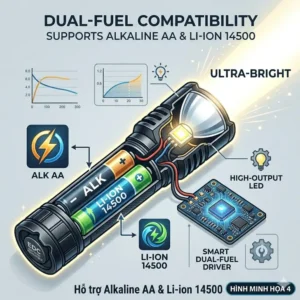
If your flashlight is “dual-fuel” (meaning it accepts both AA and 14500 Lithium), always use the 14500 cell for maximum brightness. A standard AA battery provides 1.2V to 1.5V, while a 14500 Lithium-ion cell provides 3.7V. This extra voltage is what allows the driver to push the LED to its 1,000-lumen limit. However, for long-term storage in a “junk drawer” or car glovebox, use Lithium Primaries (Energizer Ultimate Lithium). They don’t leak like alkalines and have a 20-year shelf life.
Maintenance Schedule
-
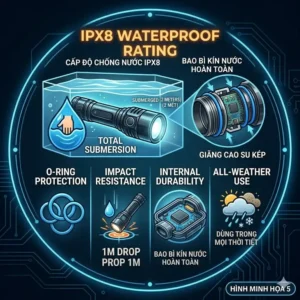
Thread Cleaning: Every 6 months, wipe the threads of the tailcap and head with a clean cloth and apply a tiny dab of Nyogel or silicone grease. This keeps the waterproof seal intact and ensures smooth twisting.
-
Contact Points: Use a Q-tip with a bit of rubbing alcohol to clean the silver or gold contacts inside the light. Dirt buildup here is the #1 reason why flashlights flicker or fail to turn on.
-
O-Ring Inspection: If the rubber O-rings look cracked or dry, replace them immediately. Most high-end brands like Fenix or Nitecore include spares in the box—don’t throw them away!
Pro Tip: The “Ceiling Bounce”
In a power outage, don’t point your light at the floor. Stand it on its tail (if it can tail-stand) and point it at a white ceiling. The ceiling will act as a giant reflector, diffusing the light and illuminating the entire room with a soft, natural glow rather than a harsh, blinding beam.
Real-World Scenario: Which Light Fits Your Life?
Choosing the brightest aa battery flashlight depends entirely on your environment. Let’s look at three common user profiles to see which model wins.
The “Daily Dog Walker”
-
Needs: Reliable wide beam, easy-to-find side switch, enough “oomph” to spot a coyote at 50 yards.
-
The Winner: Fenix LD22 V2.0. The dual-switch design means you can set your brightness level and leave it there, using the tail switch for quick bursts of light when you hear a rustle in the bushes.
The “Emergency Preparedness Pro”
-
Needs: Long shelf life, compatibility with any AA battery found in a TV remote, extremely low “Firefly” mode for conserving power during a multi-day blackout.
-
The Winner: ThruNite Archer 2A V3. Its efficiency on standard batteries is unmatched, and the 0.1-lumen mode can run for weeks on a single pair of AAs.
The “Back-Pocket Mechanic”
-
Needs: Slim enough to fit in a pen pocket, durable enough to survive a drop into an engine bay, “punchy” beam to see through dark crevices.
-
The Winner: Streamlight ProTac 2AA. Its beam is designed for contrast, which helps you distinguish between a black rubber hose and a black plastic wire—a distinction that matters when you’re under a car.
How to Choose the Brightest AA Battery Flashlight: A 5-Step Framework
Navigating the sea of marketing jargon can be exhausting. Use this expert framework to filter out the noise and find a light that actually delivers.
-
Check the Battery Requirements: Does the “1,000 lumens” claim require a special battery? If the listing says “1,000 Lumens*” with a tiny asterisk, it usually means you need a Li-ion 14500 cell. Ensure you’re okay with buying a charger or look for a model that includes a USB-C rechargeable battery.
-
Look for ANSI/PLATO FL1 Standards: Reputable brands test their lights according to the ANSI/NEMA FL1 Standards. This ensures that the lumens, runtimes, and water resistance claims are verified by a third party, not just the marketing department’s imagination.
-
Analyze the “Beam Distance” (Candela): Lumens are total light output (the “volume”), but Candela is the “intensity” (the “throw”). If you need to see far away, look for higher candela. If you need to see everything right in front of you (like a hiking trail), look for a “floody” beam with a lower candela-to-lumen ratio.
-
Evaluate the Interface: Do you want a simple “On/Off” light, or do you want 5 modes, Strobe, and SOS? For most people, 3 modes (Low, Medium, High) are the sweet spot. Too many modes can make a light frustrating to use in a panic.
-
Prioritize Regulated Drivers: Cheap flashlights get dimmer as the battery dies. High-quality lights from brands like Olight or Streamlight use regulated drivers that keep the brightness constant until the battery is almost completely depleted.
Common Mistakes When Buying a High-Lumen AA Light
The biggest mistake I see beginners make is trusting “no-name” brands on massive marketplaces. You’ll often see “90,000 Lumen Tactical Flashlight” for $15. Physics simply doesn’t allow for 90,000 lumens from a single AA battery—that much light would require a battery the size of a car and would generate enough heat to cook a steak. If a claim sounds too good to be true, it is.
Another pitfall is ignoring the “Step-Down.” Most “brightest” lights can only stay at their maximum setting for 30 to 90 seconds. After that, they “step down” to a lower brightness to protect the electronics. When reading reviews, look for the “Sustained Output” rating. A light that can hold 300 lumens for two hours is often more useful than a light that hits 1,000 lumens for 30 seconds and then drops to 50.
Lastly, don’t forget about Color Rendering Index (CRI). While high-lumen lights often have a “cool white” tint (which can look blue/harsh), some specialized AA lights use “High CRI” LEDs. These show colors more accurately—crucial for medical professionals checking a wound or electricians identifying colored wires.
AA Batteries vs. Lithium-Ion 18650: The Great Debate
Why choose the brightest aa battery flashlight when 18650 or 21700 batteries offer three times the power? It comes down to emergency logistics. During a natural disaster, like a hurricane or earthquake, the power grid goes down. You can’t recharge your 18650 cells. However, every pharmacy, grocery store, and convenience store will have packs of AA batteries.
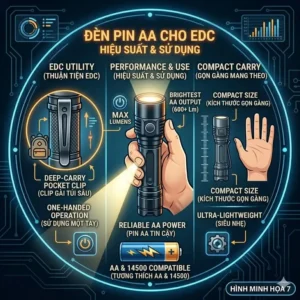
Furthermore, AA lights are generally thinner and lighter. An Olight i5T Plus is about the thickness of a Sharpie, making it comfortable to wear in a suit pocket or jeans. A heavy-duty 21700 light feels like a roll of quarters in your pocket. For 90% of daily tasks—finding your keys, walking to your car, or checking the breaker box—the power of an AA light is more than sufficient.
That said, the “Total Cost of Ownership” is lower for rechargeable AA cells (NiMH). If you use your light daily, a set of Panasonic Eneloop batteries will pay for themselves in months. They can be recharged up to 2,100 times, whereas alkalines are “one and done” and prone to leaking acid that ruins expensive flashlights.
What to Expect: Real-World Performance & Runtimes
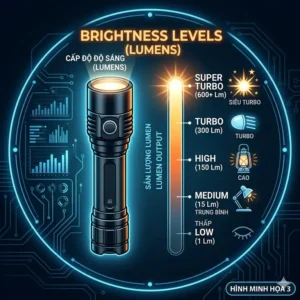
When you take your new brightest aa battery flashlight out of the box, don’t expect it to turn night into day for four hours straight. Here is a realistic breakdown of what a modern, high-quality AA light (like the Nitecore MT2A Pro) can do:
-
Turbo Mode (1,000 Lumens): Incredible for about 1 minute. It will light up your entire backyard. After that, it will gradually dim to around 300-400 lumens to stay cool.
-
High Mode (300 Lumens): This is the “sweet spot.” It’s plenty bright for hiking or searching, and most 2xAA lights can hold this for 1.5 to 2.5 hours.
-
Medium Mode (50-100 Lumens): Perfect for indoor use during a power outage. You can expect 5 to 10 hours of runtime here.
-
Low/Moonlight Mode (1-5 Lumens): Ideal for night-stand use or checking on a sleeping baby. Runtimes here are measured in days, not hours.
Remember that environmental factors matter. In the freezing winter, battery capacity drops. In the hot summer, the flashlight will step down its brightness faster because it can’t shed heat as effectively.
Tailoring Advice for Specific Audiences
For Seniors
Look for a light with a “forward-clicky” tail switch. These are easier to operate for those with arthritis because they don’t require complex “double-clicks” or “long-presses.” The ThruNite Archer 2A V3 is excellent here because the modes are separated: one button turns it on, and a different button changes the brightness.
For Outdoor Adventurers
Weight is everything. If you’re backpacking, a single-AA light like the Lumintop Tool AA 3.0 (which hits 900 lumens on a 14500 cell) provides the best “lumens-per-ounce” ratio. Pair it with a headband mount, and you have a backup headlamp for almost zero weight penalty.
For Commuters & City Dwellers
Style and “pocketability” are key. You want a light that won’t tear your pocket lining. The Olight i5T Plus has smoothed edges and a “deep-carry” clip that keeps the light hidden and secure while you’re on the subway or walking to your apartment.
Long-Term Cost & Maintenance: Is It Worth the Investment?
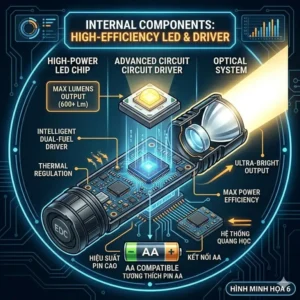
When you spend $50 on a flashlight, you aren’t just buying the metal and the LED; you’re buying the circuitry. A $5 grocery store light uses “direct drive,” meaning as the battery drains, the light gets dimmer almost immediately. A professional-grade light uses a “constant-current boost driver.”
Total Cost of Ownership (TCO) Example:
-
Cheap Light ($10) + Alkalines ($20/year): Over 5 years, you spend $110. The light likely fails after year 2 due to a leaky battery.
-
Premium Light ($50) + Eneloops ($15): Over 5 years, you spend $65. The light is still working, performs better, and has a warranty.
Investing in a high-quality brand like Streamlight or Fenix is actually the more “frugal” choice in the long run. These companies offer limited lifetime warranties and have actual customer service departments in the USA to help you if something goes wrong.
Features That Actually Matter (And Those That Don’t)
Flashlight marketing is full of “tactical” fluff. Let’s filter the gold from the dross.
Features That Matter:
-
IPX8 Waterproofing: Even if you don’t plan on diving, this ensures that a drop in a puddle or a heavy rainstorm won’t kill your light.
-
Type III Hard Anodizing: This is the finish on the aluminum. Cheap paint chips in days; Type III anodizing is nearly as hard as sapphire and protects the light from scratches.
-
Low Battery Warning: Some modern AA lights will blink or change the switch color when the battery is low. This prevents you from being surprised by total darkness.
Marketing Hype to Ignore:
-
“Military Grade” Aluminum: Almost all flashlights use 6061 aluminum, which is standard. It’s a buzzword that adds no value.
-
“Self-Defense” Bezels: Unless you are highly trained, a 4-inch flashlight isn’t a weapon. Focus on the light quality, not the “spiky” bits on the end.
-
SOS/Beacon Modes: While nice to have, they are rarely used. Don’t pay extra for a light just because it has 12 different flashing modes.
Safety, Regulations, and Battery Compliance
In 2026, the Consumer Product Safety Commission (CPSC) has increased scrutiny on high-output Lithium-ion batteries. When using 14500 cells in your brightest aa battery flashlight, only buy “Protected” cells. These have a tiny circuit board built into the battery that prevents it from over-charging, over-discharging, or short-circuiting.
If you are using your light in a hazardous environment (like a grain silo or an oil rig), a standard “bright” flashlight is actually a fire hazard. You must look for an “Intrinsically Safe” rating (Class I, Div 1). Lights like the Streamlight ProTac series often have specific models rated for these dangerous environments. For the average homeowner, a standard IPX8-rated light is perfectly safe for all household tasks.
✨ Don’t Miss These Exclusive Deals!
🔍 Take your safety to the next level with these carefully selected products. Click on any highlighted item to check current pricing and availability. These tools will help you create an authentic sense of security your family will love!
Conclusion: Lighting Your Path in 2026
The quest for the brightest aa battery flashlight leads to a surprising realization: the “best” light isn’t just the one with the highest number, but the one that fits your specific reality. Whether you choose the raw power of the Nitecore MT2A Pro, the indestructible nature of the Streamlight ProTac 2AA, or the balanced efficiency of the Fenix LD22 V2.0, you are investing in a tool that bridges the gap between modern technology and old-school reliability.
In an era where everything seems to require a proprietary charger and a software update, there is something deeply comforting about a device that can be powered by a battery found in a kitchen drawer. By following our expert guide, you’ve learned how to spot marketing hype, how to maintain your gear, and how to choose the right “fuel” for your needs. Stay safe, stay prepared, and keep the lights on!
FAQs
❓ What is the brightest aa battery flashlight on the market right now?
✅ As of 2026, the Nitecore MT2A Pro is widely considered the brightest, reaching 1,000 lumens when using its specialized rechargeable battery. On standard alkaline AA batteries, it still produces a respectable 300 lumens with significant throw distance…
❓ Can I use 14500 lithium batteries in any AA flashlight?
✅ No! You must check the manufacturer’s manual. A 14500 battery has 3.7V, while a standard AA has 1.5V. Putting a 3.7V battery into a light designed only for 1.5V will immediately “fry” the LED and void your warranty…
❓ Why does my flashlight get hot when I use the highest setting?
✅ High-output LEDs generate significant heat. In a small AA-sized body, there isn’t much surface area to dissipate that heat. Most quality lights have “thermal regulation” that automatically lowers the brightness if the internal temperature gets too high…
❓ How long do AA batteries last in a high-lumen flashlight?
✅ On the “Turbo” or “High” setting, most AA lights will last between 1 and 2 hours. However, if you use a “Medium” setting (around 50 lumens), you can often get 10 to 15 hours of continuous use…
❓ Are rechargeable AA batteries better than alkalines for flashlights?
✅ Yes, absolutely. NiMH batteries like Panasonic Eneloops provide more consistent power under high demand and won’t leak corrosive acid. For long-term emergency storage, however, Energizer Ultimate Lithium (non-rechargeable) is the superior choice…
Recommended for You
- 7 Brightest AA Flashlight Models in 2026: The Ultimate Power Guide
- Best car flashlight: 7 Powerful Picks for Your 2026 Safety Kit
- Mechanic Flashlight: 7 Best Professional Work Lights to Buy in 2026
Disclaimer: This article contains affiliate links. As an Amazon Associate, I earn from qualifying purchases. If you purchase products through these links, we may earn a small commission at no additional cost to you.
✨ Found this helpful? Share it with your friends! 💬🤗
[addtoany]
