
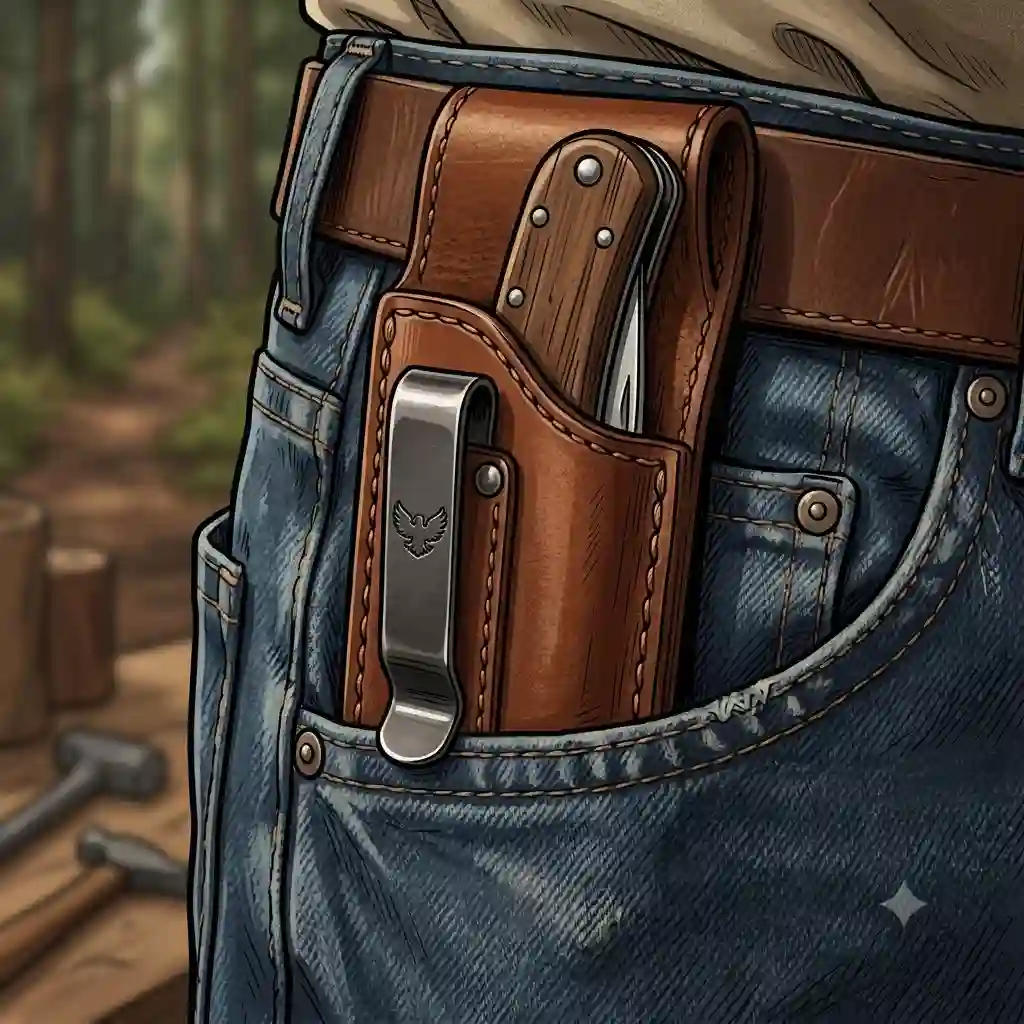
If you have ever reached for your everyday carry (EDC) fixed blade, only to have the entire kydex rig pull entirely out of your pocket, you already know the sinking feeling of hardware failure. I have spent over a decade designing, testing, and sometimes breaking EDC gear. What always surprises me is how a buyer will happily drop $200 on premium MagnaCut steel, only to rely on a flimsy, generic piece of plastic to secure it to their body. Finding the right knife sheath pocket clip is not just an afterthought; it is the absolute foundation of safe, accessible, and reliable carry.
What is a knife sheath pocket clip? Simply put, it is a specialized piece of mounting hardware, usually made from high-carbon spring steel, titanium, or high-density polymer, designed to attach a knife’s scabbard to the hem of a pocket, belt, or waistband. Its primary job is to provide enough clamping force (retention) so that when you draw the blade, the sheath stays anchored exactly where you put it.
In my field tests over the years, I’ve realized that specifications on a box rarely tell the whole story. A manufacturer might boast about “aerospace-grade” materials, but in practice, if the hole spacing does not align with industry-standard kydex grommets, or if the clamping jaw damages your denim, it is practically useless. In this comprehensive 2026 guide, we are going deep into the mechanics of everyday carry hardware. We will dissect the best products currently on the market, analyze their real-world performance, and help you find the perfect setup for your daily routine.
Quick Comparison: Top Everyday Carry Hardware
| Product Name | Material | Carry Style | Best Feature | Price Range | Best For |
| UltiClip Slim 3.3 | Spring Steel | Beltless / IWB | Cam-lock mechanism | $10 – $20 | Athletic wear / Sweatpants |
| Discreet Carry Concepts HLR | 10XX Steel Alloy | Pocket / Belt | Extreme clamping force | $15 – $25 | Heavy duty tactical use |
| Spyderco G-Clip | Polymer | OWB / IWB / Pocket | Multi-positional cant | Under $15 | Versatile daily carry |
| HolsterSmith Tough Clip | Polymer | Pocket / IWB | Gentle on fabrics | Under $15 | Office attire / Slacks |
| Armatus Carry Architect | Kydex / Nylon | Deep Pocket | Discreet profile | $15 – $25 | Deep concealed carry |
Looking at the comparison above, the UltiClip Slim 3.3 delivers the most secure hold for beltless carry under $20, but if sheer indestructible retention is your priority, the DCC HLR’s proprietary steel alloy justifies a slightly higher price point. Budget-conscious buyers or those who wear slacks to the office should note that polymer options like the Spyderco G-Clip or HolsterSmith Tough Clip sacrifice a bit of clamping force to ensure your delicate fabrics aren’t shredded after a month of use.
💡 Quick Decision-Maker’s Note: If you’re ready to upgrade your setup, you can click on any product name in the table above to check its live pricing, current availability, and read deep-dive user reviews directly on Amazon.
[addtoany]
Top 5 Picks for a Knife Sheath Pocket Clip: Expert Analysis
1. UltiClip Slim 3.3
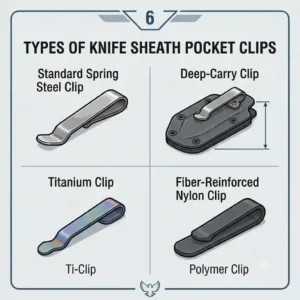
The UltiClip Slim 3.3 completely revolutionized how we approach beltless carry by utilizing a mechanical cam-lock rather than passive spring tension. Instead of just sliding over your pocket hem, you physically snap a latch down, which drives a steel tab into the fabric. The manufacturer claims it provides over 50 pounds of retention force, and I can confirm this isn’t just marketing hype. In practice, this means you can secure a relatively heavy fixed blade inside the waistband of athletic shorts or yoga pants without needing a sturdy leather gun belt to support the weight. The dual-slotted mounting area accommodates varying eyelet spacings, which saves you the headache of drilling new holes in your expensive custom kydex.
In my experience, the absolute best use case for this hardware is for the minimalist who rarely wears traditional belts. The locking jaw is incredibly secure, but that aggressive retention comes with a hidden cost: if you are not careful when disengaging the lock, the steel jaw can gradually fray the hem of your favorite jeans. What most buyers overlook is the necessity of maintenance; the mechanical hinge can gather pocket lint and sweat, requiring a drop of gun oil every few months to prevent the cam from seizing up. I highly recommend it for runners, hikers, and anyone living in gym clothes.
Looking at community feedback across EDC forums, users consistently praise its unparalleled grip on thin materials, though a few note that it can be slightly bulky under a fitted t-shirt. Sitting comfortably in the $10 to $20 range, it provides an immense return on investment by essentially turning any piece of clothing into a viable mounting platform. The value proposition is off the charts if you consider that it negates the need to buy a $60 reinforced EDC belt.
-
Pros: Mechanical lock won’t slip; works without a belt; adjustable mounting slots.
-
Cons: Can be aggressive on thin fabrics; hinge requires occasional lubrication.
2. Discreet Carry Concepts Mod 4 Universal HLR
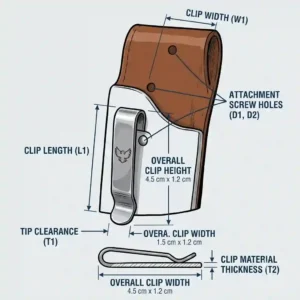
When you need a knife sheath pocket clip that absolutely will not fail under duress, the Discreet Carry Concepts (DCC) Mod 4 Universal HLR is the industry gold standard. DCC uses a proprietary 10XX steel alloy that undergoes a highly specific heat-treating process, resulting in a spring clip that boasts an absurd amount of memory and clamping force. Unlike standard stainless steel that can bend and lose its shape over time, the Mod 4 springs back to its original resting position even after being stretched over thick leather belts. The “Universal” slot allows for 1.5-inch hole spacing, meaning it is a drop-in replacement for 90% of the kydex sheaths currently sitting in your drawer.
What surprised me most during use was just how thin the metal actually is, despite its strength. It sits incredibly flush against the fabric, offering true deep concealment without the tell-tale bulge associated with bulky polymer clips. However, I have to be brutally honest: this clip is a fabric shredder if you aren’t careful. The under-hook that bites into your pocket hem is viciously sharp. In my field tests, I found that you cannot just pull this clip off; you have to physically pry the tab open before lifting, or you will tear your clothing. It is perfectly suited for heavy-duty denim or thick tactical pants, but keep it far away from your dress slacks.
Actual community reviews frequently highlight its “vault-like” security, often mentioning that it holds so tightly that drawing a knife feels smoother because the scabbard doesn’t shift a single millimeter. Priced in the mid-$10s to low-$20s range, it commands a slight premium over generic stamped steel, but the peace of mind is worth every penny. If you are a law enforcement officer, a tradesperson, or someone who prioritizes absolute retention over fabric preservation, this is your holy grail.
-
Pros: Unmatched spring tension memory; ultra-low profile design; non-reflective finish.
-
Cons: Very difficult to remove quickly; can damage delicate clothing over time.
3. Spyderco G-Clip
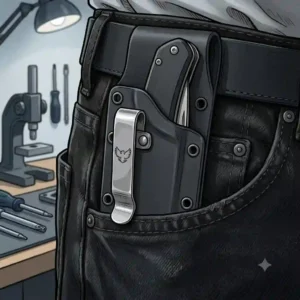
The Spyderco G-Clip takes a completely different approach by moving away from metal entirely in favor of a high-impact, fiberglass-reinforced polymer. The standout feature here is the multi-hole matrix design on the mounting plate. This allows the user to set up their rig for vertical, inverted, horizontal, or aggressively canted (angled) carry. It is engineered to accommodate belts up to 1.5 inches wide, but the flared bottom lip works exceptionally well as an inside-the-pocket anchor. Because it is polymer, it won’t rust, making it an excellent choice for maritime environments or incredibly humid climates where sweaty pockets turn carbon steel into a rusty mess.
From a hands-on perspective, I found the G-Clip to be the most forgiving option for daily civilian wear. The smooth polymer edges slide over pocket hems effortlessly and don’t bite into your skin if the hardware happens to rub against your hip. However, the spec sheet won’t tell you this, but there is a tradeoff: polymer does not possess the extreme clamping pressure of heat-treated steel. If you are wearing slick, thin synthetic pants, the clip can sometimes slide sideways during vigorous physical activity. I typically recommend this specifically for casual, daily office environments where you are wearing standard khakis or jeans and need flexible carrying angles.
Community feedback is overwhelmingly positive regarding its versatility, with many users swapping it between multiple sheaths using simple Chicago screws. Sitting comfortably under $15, it is one of the most cost-effective ways to modernize an old, uncomfortable fixed blade setup. The verdict? It’s a superb middle-ground option that balances secure retention with comfort and fabric preservation.
-
Pros: Rust-proof polymer; highly adjustable mounting angles; gentle on clothing.
-
Cons: Less clamping force than steel; slightly bulkier profile.
4. HolsterSmith Tough Clip
Often overshadowed by big-name tactical brands, the HolsterSmith Tough Clip is an unsung hero in the EDC community. Made from a heavy-duty, injection-molded proprietary polymer, this clip features a unique “J-hook” bottom lip designed specifically to catch the bottom hem of a pocket or the underside of a standard belt. The pre-drilled holes are perfectly spaced for standard 0.5-inch kydex eyelets, ensuring a seamless fit without the need for a Dremel tool. It is slightly thicker than the Spyderco offering, granting it a more rigid spine that resists twisting when you deploy your blade.
In my field tests, I found this to be the ultimate “stealth” option. Because it lacks the aggressive branding and tactical finishes of other clips, it blends seamlessly into dark clothing, looking like nothing more than a standard pen clip to the untrained eye. What most reviewers claim is that polymer clips break easily, but in practice, I found the Tough Clip’s specific polymer blend has enough flex to survive being bumped into doorframes and car seats without snapping. It is an ideal match for medium-sized EDC fixed blades carried in the front right pocket.
Reviewers consistently praise its ease of installation and the satisfying “click” it makes when sliding over a belt or pocket hem. For under $15, you get a highly durable, USA-made piece of hardware that punches well above its weight class. It represents phenomenal value for those who want reliable pocket retention without the aggressive wear and tear associated with metal alternatives.
-
Pros: Excellent stealth appearance; strong J-hook catches hem securely; very durable polymer.
-
Cons: Pre-drilled holes limit angle adjustments; thicker profile than metal clips.
5. Armatus Carry Architect Pocket Clip
Armatus Carry is renowned for their premium kydex sheaths, and their proprietary Architect Pocket Clip perfectly complements their high-end philosophy. This clip utilizes a unique hybrid design: a sturdy, flexible nylon/polymer over-hook mated to a broad, flat mounting base. The wide footprint of the mounting base is its true superpower; by spreading the mounting screws further apart, it virtually eliminates the side-to-side pivot (or “wobble”) that plagues single-screw clip designs. It is designed specifically for deep pocket carry, allowing the handle of the knife to sit well below the pocket line for maximum concealment.
My expert opinion is that this is the best clip for larger, heavier fixed blades that you still want to pocket-carry. When I tested this with a heavy 4-inch bushcraft knife, the wide base stabilized the sheath remarkably well against my leg, preventing it from swinging like a pendulum while walking. However, the wide footprint means it won’t fit on micro-sheaths or minimalist kydex rigs. You need a sheath with a decent amount of surface area to accommodate the mounting plate. I highly recommend this for users who want to transition their outdoor hiking knives into a semi-concealed urban carry role.
The community loves the Architect clip for its stability and aesthetic appeal, frequently noting that it feels like a custom-made upgrade. Priced in the $15 to $25 range, it sits at the premium end of polymer clips, but the zero-wobble performance easily justifies the cost for serious EDC enthusiasts.
-
Pros: Wide base eliminates sheath wobble; enables very deep carry; durable nylon construction.
-
Cons: Requires a wider sheath for mounting; more expensive than standard polymer clips.
🔍 Ready to Upgrade Your EDC Setup?
Whether you’re trying to prevent your heavy fixed blade from bouncing around during a hike, or simply looking to save your dress slacks from aggressive steel jaws, upgrading your mounting hardware changes everything. Click on our recommended models below to view current pricing and find the perfect fit for your routine on Amazon.
How to Choose a Knife Sheath Pocket Clip
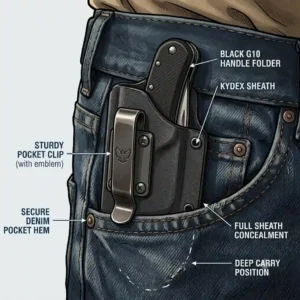
Selecting the right hardware isn’t just about picking the coolest-looking tactical accessory; it is an engineering decision based on your specific lifestyle. Here is an expert breakdown of the criteria you must evaluate.
-
Material Composition (Steel vs. Polymer): High-carbon spring steel offers unparalleled clamping force and a microscopically thin profile, but it can rust and shred delicate fabrics. Injection-molded polymers (like fiberglass-reinforced nylon) won’t rust and are gentler on clothes, but they require a thicker profile to achieve the same strength and can theoretically snap under extreme cold or high impact.
-
Mounting Hole Spacing: The industry standard for kydex grommets is 0.5-inch or 1.5-inch spacing. Always measure the distance between the eyelets on your current scabbard before purchasing. Buying a clip with vertical slots (rather than fixed holes) provides the most versatility.
-
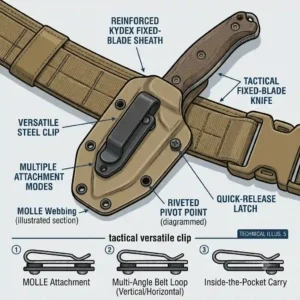
Carry Angle (Cant): If you carry in the front pocket, a straight vertical drop is usually best. If you carry inside the waistband (IWB) at the 4 o’clock position, you want a clip that allows for a 15-to-30-degree forward cant to facilitate a natural draw stroke.
-
Retention Mechanism: Passive retention relies purely on the spring tension of the material squeezing the fabric. Active retention (like a cam-lock) physically clamps down and locks. If you don’t wear a belt, active retention is almost mandatory.
Expert Analysis: Looking at the criteria above, it becomes clear that there is no “perfect” clip for everyone. The steel versus polymer debate comes down to environmental factors; if you work in maritime environments, polymer is the smart choice, but if you require absolute security in a physical altercation, a steel clip with active retention is unmatched.
Case Study: The Commuter vs. The Backcountry Hiker
To truly understand how to pick a knife sheath pocket clip, we need to look at real-world applications. Let’s evaluate two incredibly different user profiles and match them with their ideal hardware.
Profile A: Dave, The Urban Commuter
Dave takes the subway to his office job every day. He wears business casual attire (khakis or slacks) and carries a small 2.5-inch fixed blade for utility tasks. He needs deep concealment to avoid alarming coworkers, and he needs hardware that won’t ruin his $80 trousers.
-
The Perfect Match: The HolsterSmith Tough Clip.
-
The Reasoning: Dave needs the gentle touch of a polymer clip. The Tough Clip’s J-hook easily slips over his pocket hem, securing the blade without drawing attention. A highly aggressive steel clip would tear up his office wear within a month, making the Tough Clip the clear winner for low-impact urban environments.
Profile B: Sarah, The Trail Runner
Sarah runs 5 miles every morning on isolated trails. She wears thin, beltless athletic shorts or leggings. She carries a lightweight self-defense knife. Her primary concern is the blade bouncing out of her pocket or the sheath pulling free during a high-stress draw.
-
The Perfect Match: The UltiClip Slim 3.3.
-
The Reasoning: Sarah doesn’t wear a belt, which instantly disqualifies 80% of standard clips. The cam-lock of the UltiClip bites securely into the thin waistband of her leggings, ensuring the knife stays exactly where she put it, regardless of how vigorously she sprints.
Step-by-Step Guide to Installing Your Hardware
Amazon product listings will sell you the clip, but they almost never tell you how to install it correctly to prevent catastrophic failure in the field. Here is the practical usage guide you need to set up your rig like a professional.
-
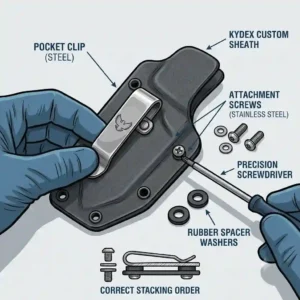
Preparation and Alignment: Remove your old hardware. Place your new clip over the kydex eyelets to check alignment. Do not force screws into misaligned holes; if the spacing is slightly off, use a small round file to gently elongate the hole on the kydex, not the clip.
-
The Rubber Spacer Rule: Never mount a hard clip directly against hard kydex. You must use a rubber spacer (or O-ring) between the clip and the sheath. This spacer acts as a shock absorber, preventing the kydex from cracking under pressure and providing tension to keep the screws from backing out.
-
Apply Threadlocker (Crucial Step): This is the most common mistake beginners make. Once you have determined your ride height and cant, apply a single drop of medium-strength blue threadlocker (like Loctite 242) to the threads of your Chicago screws. Never use red threadlocker, or you will need a blowtorch to remove it later.
-
The 24-Hour Cure: Tighten the screws until the rubber spacer slightly bulges, then stop. Over-tightening will strip the threads. Let the rig sit for 24 hours to allow the threadlocker to cure completely before wearing it.
Belt Carry vs. Pocket Carry: A Tactical Comparison
| Feature | Pocket Carry | Belt Carry (IWB/OWB) | Real-World Impact |
| Concealment | Very High | Moderate to High | Pocket carry hides the handle deeper. |
| Draw Speed | Moderate | Very Fast | Belt carry allows for an unobstructed grip. |
| Comfort Sitting | Low | High | Pocket carry can bind up in the groin when seated. |
| Hardware Strain | High | Low | Pocket hems are thinner and offer less support than a thick belt. |
Looking at this tactical comparison, the data shows that pocket carry excels in absolute concealment but sacrifices speed and seated comfort. When using a knife sheath pocket clip specifically for the pocket, you are putting immense strain on a thin piece of denim, making aggressive clamping force vital. Conversely, belt carry provides a rigid foundation, meaning you can often get away with slightly less aggressive hardware without compromising retention.
Common Mistakes When Buying a Knife Sheath Pocket Clip
In my years of consulting for EDC enthusiasts, I see the same three mistakes repeated constantly. Avoiding these pitfalls will save you money and frustration.
1. Ignoring the “Bite” of the Clip
People often buy the clip with the strongest possible spring tension, assuming tighter is always better. What they don’t realize is that extreme tension requires a reinforced fabric edge to bite onto. If you clip a heavy-duty steel rig onto thin summer shorts, the clip will fold the fabric over itself, ruining the garment and failing to hold the sheath securely during a draw. Match the tension to the textile.
2. Forgetting About Screw Head Clearance
The spec sheet will tell you the hole spacing, but it rarely mentions screw head clearance. If the holes on the clip are recessed too deeply or situated too close to a bend in the metal, your standard flat-head screwdriver won’t fit into the slot to tighten the Chicago screw. Always look for clips with wide, accessible mounting channels.
3. The “One Clip Fits All” Fallacy
Many buyers assume they can buy one clip and move it back and forth between different knives depending on the day. In practice, constantly unscrewing and re-screwing kydex hardware strips the threading and wears out the rubber spacers. Hardware is relatively cheap; buy a dedicated clip for each of your primary EDC blades and lock the threads down permanently.
Features That Actually Matter (And Those That Don’t)
When navigating product listings, it is easy to get overwhelmed by marketing buzzwords. Let’s separate the features that dramatically impact your daily routine from the fluff that just drives up the price.
What Actually Matters:
-
Slot-Style Mounting Holes: Instead of perfectly round pre-drilled holes, slots give you a few millimeters of wiggle room. This is critical because hand-pressed kydex sheaths often have microscopic variations in eyelet spacing. Slots guarantee a fit.
-
Under-Hook Design: A clip that is completely flat on the bottom relies solely on friction. A clip with a pronounced under-hook or “J-hook” catches the physical hem of your clothing. That physical barrier is what prevents the sheath from coming out with the knife.
-
Matte / Non-Reflective Finish: A shiny silver clip instantly draws the eye and screams “tactical gear,” ruining concealment. Matte black oxide or tumbled finishes are essential for flying under the radar.
What Doesn’t Matter (Marketing Hype):
-
“Aerospace-Grade” Aluminum: Aluminum is lightweight, but it has terrible memory retention compared to spring steel. If an aluminum clip bends outward, it stays bent. Avoid aluminum for retention hardware.
-
Extreme Weight Ratings: If a brand claims their clip holds 150 lbs, ignore it. You are carrying a 6-ounce knife, not rappelling down a mountain. Focus on the shape of the bite, not arbitrary weight limits.
Long-Term Maintenance: Keeping Your Retention Strong
A knife sheath pocket clip is a mechanical wear item. It will not last forever, but proper maintenance can drastically extend its lifespan. Here is your “Year One” roadmap for keeping your gear in top condition.
Month 1-3:
During the break-in period, the primary issue is hardware loosening. The constant vibration of walking and driving can back screws out, even with threadlocker. Every 30 days, take a screwdriver and gently check the torque on your Chicago screws. If they spin easily, you need to clean the threads with rubbing alcohol and reapply Loctite.
Month 6:
For steel clips, this is when surface rust begins to appear, especially if you carry inside the waistband where sweat accumulates. Remove the clip and scrub it with a nylon brush and a standard household CLP (Cleaner, Lubricant, Preservative). Wipe it almost completely dry; leaving it dripping in oil will stain your clothes.
Month 12:
This is the tension-check milestone. Take the unloaded sheath and clip it to your thickest pair of jeans. Pull upward firmly on the sheath. If it slips off easily, the spring steel or polymer has lost its memory. With some steel clips, you can remove them, place them in a vise, and carefully bend them back into a tighter shape. For polymer, once the tension is gone, the clip must be replaced to maintain safety.
Safety, Compliance, and Concealed Carry Regulations
While a pocket clip seems innocuous, how it dictates your carry method intersects heavily with local regulations. The spec sheet won’t tell you this, but your hardware directly impacts your legal compliance.
In many jurisdictions across the United States, a fixed blade knife is subject to much stricter concealed carry laws than a folding knife. If your clip allows the knife to sit completely below the pocket line (deep concealment), you may inadvertently be committing a weapons violation depending on the blade length and local statutes. For example, some states require a portion of the knife handle or the clip itself to be visible to qualify as “open carry.”
This is why multi-positional clips, like the Spyderco G-Clip, are incredibly valuable. If you travel across state lines into a jurisdiction with strict concealment laws, you can simply unscrew the hardware and adjust the cant to move the knife from an inside-the-waistband hidden carry to an outside-the-waistband open carry configuration. Always research the knife laws in your specific county and state, and ensure your hardware setup supports lawful carry practices.
Conclusion
Finding the perfect knife sheath pocket clip is the crucial final step in perfecting your everyday carry system. We’ve explored how a few ounces of steel or polymer can drastically alter your comfort, concealment, and draw speed. From the vault-like security of the Discreet Carry Concepts HLR to the beltless innovation of the UltiClip Slim 3.3, the market in 2026 offers highly specialized tools tailored to exact user profiles. Remember, your knife is only as reliable as the hardware holding it to your body. Don’t compromise your $200 blade by trusting it to a cheap, generic clip. Assess your wardrobe, evaluate your daily environment, and invest in mounting hardware that complements your lifestyle.
FAQs
❓ What is the standard hole spacing for a knife sheath pocket clip?
✅ The industry standard for most custom and production kydex sheaths is 1.5 inches (center-to-center) for large knives, and 0.5 inches for smaller neck knives or minimalist rigs. Always measure your specific sheath before purchasing replacement hardware to ensure compatibility…
❓ Can I use a pocket clip on a leather sheath?
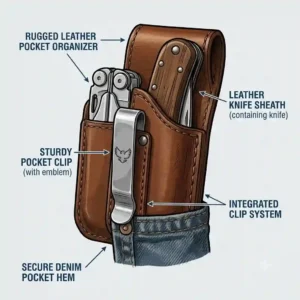
✅ Yes, but it requires modification. Leather sheaths usually lack the hard eyelets necessary for screw-mounting. You will need to carefully drill holes and install Chicago screws, ensuring the leather is thick enough to support the mounting base without tearing…
❓ Why is my pocket clip ruining my pants?
✅ High-tension steel clips with aggressive J-hooks create intense friction against fabric. When you draw the knife or remove the sheath daily, the sharp metal edges micro-tear the threads. Switching to a polymer clip or using a belt minimizes this damage…
❓ Does threadlocker prevent me from removing my clip later?
✅ Only if you use the wrong type. Medium-strength blue threadlocker prevents screws from vibrating loose but can still be broken free with a standard hand screwdriver. Red threadlocker requires high heat to remove and should never be used on kydex…
❓ How do I fix a loose kydex sheath clip?
✅ First, check if the mounting screws have backed out. If the screws are tight but the sheath wobbles, you likely forgot to install the rubber spacers between the clip and the kydex. If the clip itself has lost spring tension, it must be replaced…
Recommended for You
- 5 Best Pocket Clip Upgrades of 2026: An Expert’s Ultimate EDC Guide
- 5 Best Knife Beads for Your EDC (2026 Expert Review & Guide)
- The 5 Best Knife Belt Clip Options in 2026 (Expert Tested & Reviewed)
Disclaimer: This article contains affiliate links. As an Amazon Associate, I earn from qualifying purchases. If you purchase products through these links, we may earn a small commission at no additional cost to you.
✨ Found this guide helpful? Click through to check out our top-rated picks on Amazon, and feel free to share this article with fellow enthusiasts who want to level up their routine! 💬🤗
[addtoany]
