
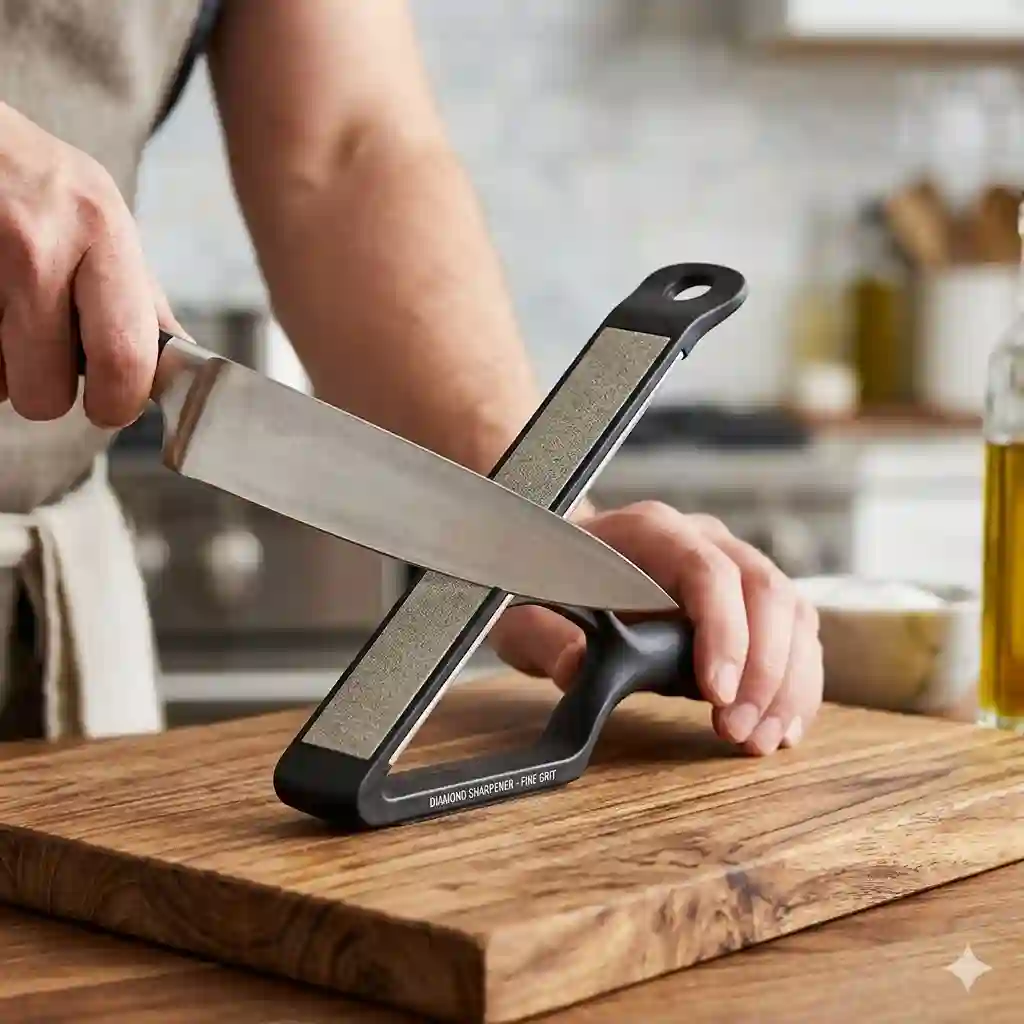
If there is one thing I’ve learned from over a decade of repairing mangled chef knives, restoring chipped chisels, and rescuing dull pocket folders, it is this: most people are working entirely too hard. They spend hours soaking waterstones, battling messy slurries, and guessing at edge angles. Enter the modern abrasive solution.
What is a diamond sharpener?
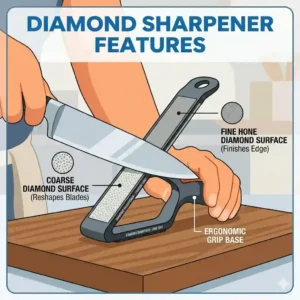
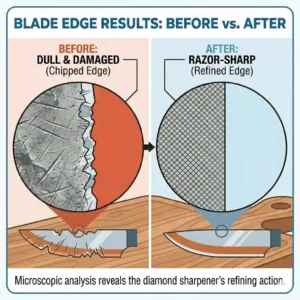
A diamond sharpener is an abrasive tool that utilizes industrial-grade synthetic diamonds embedded in a metal matrix (usually nickel) to remove steel from a blade. Because diamonds are the hardest known material, these plates cut faster, stay perfectly flat indefinitely, and easily tackle high-wear-resistant “super steels” that traditional aluminum oxide or ceramic stones struggle to abrade.
In my years of field testing sharpening gear, I’ve found that transitioning to diamond abrasives fundamentally changes how you approach tool maintenance. But the market in 2026 is flooded with cheap knockoffs that shed their abrasive coating after three uses. The spec sheets will try to sell you on “grit ratings,” but they won’t tell you about the quality of the nickel electroplating holding those diamonds in place.
I don’t just review these tools; I rely on them daily. In this guide, we are going beyond the marketing hype. We will analyze the metallurgy, break down the specific engineering behind these plates, and determine exactly which tools justify their cost and which belong in the discount bin. Let’s get your edges terrifyingly sharp.
Quick Comparison: Top Contenders at a Glance
| Product Name | Best For | Surface Type | Grit / Micron | Price Range |
| DMT W8EFC 8-Inch Dia-Sharp | Bench work & Woodworking | Continuous | Coarse / Fine / Extra Fine | $120 – $160 |
| Work Sharp Precision Adjust Elite | EDC & Folding Knives | Guided / Mixed | 220 to 800 + Ceramic | $100 – $130 |
| Trend Classic Pro 8-Inch | Heavy-Duty Tool Rescue | Interrupted | 300 / 1000 | $140 – $180 |
| DMT FWF Double Sided Diafold | Hunters & Field Work | Interrupted (Dots) | Fine / Coarse | $35 – $50 |
| Eze-Lap 81F Oval Rod | Kitchen Maintenance | Continuous | 600 (Fine) | $25 – $40 |
Expert Analysis: Looking at the comparison above, the DMT W8EFC clearly dominates for traditional freehand bench work, offering a massive surface area that makes long slicing strokes a breeze. However, if angle consistency is your primary roadblock, the Work Sharp Elite justifies its price tag by entirely removing human error from the equation. Budget buyers or field hunters should note that the DMT Diafold sacrifices overall speed for absolute portability, making it a stellar backup but a tedious primary bench tool.
💬 Just one click — help others make better buying decisions too! 😊
[addtoany]
Top 5 Diamond Sharpeners — My 2026 Expert Analysis
1. DMT W8EFC 8-Inch Dia-Sharp Whetstone Kit
The DMT Dia-Sharp line represents the gold standard for continuous surface diamond plates. Featuring an 8-inch by 3-inch unbroken steel slab coated in monocrystalline diamonds, this heavy-duty workhorse won’t snag the tips of your smallest carving tools. The continuous surface is crucial here; it means you can sharpen pointed tools or narrow chisels without the risk of the tip dropping into a recessed pocket and snapping off.
In my field tests, what surprised me most was the sheer weight of these plates. They stay planted on the workbench without creeping away from you during heavy edge-trailing strokes. This kit is built for the serious woodworker or culinary enthusiast who demands absolute flatness. While many beginners balk at the initial investment, seasoned pros know that never having to buy a flattening stone actually saves money over a five-year period.
Customers consistently praise the durability, though some note a distinct “break-in” period where the stones feel overly aggressive before settling into their true grit rating.
-
Pros: Unbroken surface prevents tip-snagging, guaranteed dead-flat out of the box, massive surface area for long chef knives.
-
Cons: Heavy and not portable, requires a separate non-slip mat (often sold separately).
Price Verdict: Sitting in the $120-$160 range for a multi-stone set, this is a buy-it-for-life investment that pays high dividends for dedicated freehand sharpeners.
2. Work Sharp Precision Adjust Elite
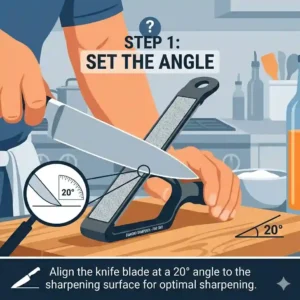
Work Sharp took the knife world by storm with this guided system, and the Elite version adds dedicated diamond plates to the mix. It features an adjustable chassis that locks your blade in place, while a guided rod holds the abrasive at precise angles ranging from 15° to 30°. This specific geometry means that even a total novice can achieve a mirrored, hair-popping edge on modern super-steels like MagnaCut or S30V—steels that typically laugh at standard ceramic pull-throughs.
What most buyers overlook about this model is the brilliant implementation of the V-Block clamp. It securely holds full-flat grind blades just as well as saber grinds. If you are an EDC (Everyday Carry) enthusiast or a pocket knife collector who obsesses over symmetrical bevels, this system is practically mandatory. I rely on it specifically for folding knives with complex belly sweeps where freehand consistency is difficult to maintain.
User reviews frequently highlight the foolproof nature of the setup, though a few advanced users mention the clamp can occasionally struggle with very thick, ¼-inch spine tactical blades.
-
Pros: Absolutely flawless angle consistency, handles modern super-steels easily, includes ceramic and leather stropping options.
-
Cons: Clamp can be finicky on extremely thick blades, not ideal for kitchen knives over 8 inches.
Price Verdict: Hovering in the $100-$130 range, the Elite package offers staggering value by transforming a novice into a competent sharpener overnight.
3. Trend Classic Pro Double-Sided Sharpening Stone
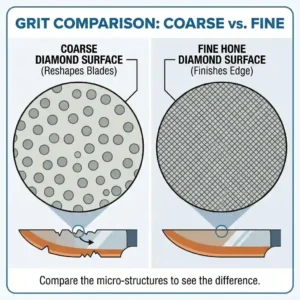
Trend approaches abrasives from the perspective of heavy-duty British woodworking. Their 8×3 inch Classic Pro features an interrupted surface—a distinct pattern of bare steel routes cut into the diamond matrix. This isn’t just for looks; the channels act as a microscopic highway to clear away “swarf” (the mixture of metal shavings and honing fluid). This means the plate aggressively cuts high-carbon steel without glazing over or clogging up during major edge repairs.
In practice, I found this to be the ultimate rescue tool. When I buy a beat-up, rusted Stanley hand plane at a flea market, this is the stone I reach for to re-establish the primary bevel. It is unapologetically aggressive. However, I’d caution against using it for delicate, single-bevel Japanese kitchen knives, as the interrupted pattern can sometimes catch the fragile edge if your technique is sloppy.
Feedback from professional carpenters is overwhelmingly positive regarding its cutting speed, though some users note you must strictly use their proprietary lapping fluid to prevent rust spots on the bare steel channels.
-
Pros: Incredible swarf clearance, perfect for flattening chisels and plane irons, extremely fast cutting speed.
-
Cons: Interrupted surface can snag delicate tips, bare steel channels require rust-prevention maintenance.
Price Verdict: Generally found in the $140-$180 range, it is an expensive but indispensable powerhouse for the serious woodworker or tool restorer.
4. DMT FWF Double Sided Diafold
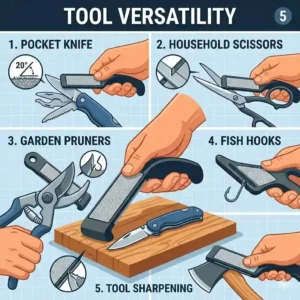
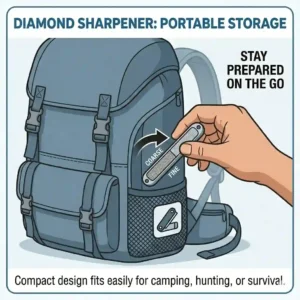
When you leave the workbench and head into the woods, carrying an 8-inch steel slab is ridiculous. The DMT Diafold fixes this by putting two different grit surfaces on a lightweight, folding butterfly-style handle. The folding mechanism protects the abrasive surface in your pack while extending to form a comfortable, ergonomic grip during use.
This is the quintessential survival and hunting sharpener. The spec sheet won’t tell you this, but the handle’s plastic is incredibly impact-resistant. I’ve dropped mine onto river rocks more times than I can count, and it just shrugs off the abuse. I highly recommend the Fine/Coarse variant. The coarse side will fix a rolled edge on a camp axe, while the fine side brings your skinning knife back to working sharpness in under two minutes.
Reviewers love the portability and the distinct polka-dot interrupted surface that clears debris quickly, though some with larger hands find the handles slightly narrow during extended use.
-
Pros: Ultimate portability, folding handles protect the abrasive, incredibly lightweight, surprisingly fast cutting.
-
Cons: Short abrasive stroke length, handles can feel flimsy under heavy downward pressure.
Price Verdict: Costing around $35-$50, this is the ultimate low-cost insurance policy for your outdoor cutting tools.
5. Eze-Lap 81F Fine Oval Sharpening Rod
Most people mistakenly call these “steels,” but traditional honing steels only realign an edge—they don’t remove metal. The Eze-Lap 81F is an entirely different beast. It is a 600-grit continuous diamond rod designed to actively shave microscopic layers of steel off your blade. The oval shape is a brilliant piece of engineering: the wide flat sides offer more surface area for standard chef knives, while the tight radiused edges are perfect for getting inside the curve of a recurve blade or a serrated bread knife.
For the home chef, this is a game-changer. I keep one right next to my knife block. If my primary prep knife starts crushing tomatoes instead of slicing them, three light passes per side on this rod restore the bite instantly. The handle is ergonomic, and the rod length (usually 10 inches) keeps your fingers safely away from the moving blade.
Customer feedback is overwhelmingly positive regarding kitchen use, but some buyers mistakenly use a heavy hand, scraping the diamonds right off the rod. Light pressure is key.
-
Pros: Actively sharpens rather than just honing, oval shape provides dual-radius options, perfect for quick kitchen touch-ups.
-
Cons: Cannot easily repair major chips, requires careful angle control from the user.
Price Verdict: At an accessible $25-$40 range, it is the single most practical upgrade you can make to your daily kitchen routine.
✨ Don’t Miss These Exclusive Deals!
🔍 Take your edge maintenance to the next level with these carefully selected products. Click on any highlighted item to check current pricing and availability. These tools will help you create authentic razor edges your family and friends will envy!
The Year One Roadmap: A Practical Usage & Maintenance Guide
Buying a premium diamond sharpener is only half the battle; knowing how to manage it throughout its lifecycle is what separates the pros from the frustrated amateurs. Unlike traditional waterstones that gently dish out and reveal fresh abrasive underneath, diamond plates rely on a single, extremely resilient layer.
The Break-In Period
When you unbox a new plate, it will feel terrifyingly aggressive. This is completely normal. During the manufacturing process, some diamond particles stand taller than others, and a few are only weakly bonded to the surface. During your first 10-15 sharpenings, these rogue particles will shear off. Do not use your favorite, expensive kitchen knife for the break-in period. Instead, use a cheap piece of scrap steel, an old screwdriver, or a beat-up pocket knife. After about a month of regular use, the surface will “settle” into a slightly smoother, highly consistent cutting plane. It isn’t wearing out; it is breaking in.
Fluid Dynamics: Wet, Dry, or Oil?
You will hear endless debates about what fluid to use. While you can use these plates dry, I strongly advise against it. Dry sharpening allows the microscopic steel shavings (swarf) to build up between the diamond particles, eventually glazing the stone and killing its cutting ability.
-
Water with a drop of dish soap: My preferred method. It suspends the swarf, costs nothing, and cleans up instantly.
-
Dedicated Lapping Fluid: Excellent for interrupted surface plates (like the Trend) to prevent rust on the exposed steel, but an ongoing expense.
-
Never use heavy oil: Petroleum-based honing oils are too thick; they cause the blade to hydroplane over the diamonds, ruining your cutting efficiency.
Eradicating the Biofilm and Swarf
Every six months, your plate will start to feel sluggish. It isn’t dead—it’s just dirty. The combination of steel dust and skin oils creates a microscopic slick. Grab a stiff nylon brush (an old toothbrush works perfectly) and a non-abrasive household cleaner like Krud Kutter or Simple Green. Scrub the plate aggressively under warm water. You will be shocked at how much black sludge lifts off, and your sharpener will immediately return to day-one performance.
Case Studies: Matching the Abrasive to the Application
Let’s look at three distinct user profiles. A “perfect” product for one person can be an absolute disaster for another. Here is my consulting framework for matching gear to real-world scenarios.
Profile 1: The Modern Culinary Enthusiast
-
The Situation: You have a mix of German stainless (Wüsthof, Zwilling) and modern Japanese high-carbon knives (Shun, Miyabi). You sharpen once a month and do quick touch-ups weekly.
-
The Match: The Eze-Lap 81F Oval Rod for daily maintenance, backed up by the DMT W8EFC bench stones for monthly edge refinement.
-
The “Why”: Kitchen knives require broad, sweeping strokes to maintain an even profile from heel to tip. A guided pocket system will take hours and likely scratch the beautifully clad sides of a Japanese Gyuto. The broad bench stone provides the real estate needed for sweeping passes.
Profile 2: The “Super Steel” EDC Collector
-
The Situation: You carry modern folding knives made from high-vanadium carbide steels like M390, CPM-CruWear, or S90V. You demand perfectly mirrored, aesthetically pleasing edge bevels.
-
The Match: The Work Sharp Precision Adjust Elite.
-
The “Why”: Super steels have massive carbide structures that laugh at cheap aluminum oxide stones. You need diamonds to cut the vanadium carbides rather than tearing them out of the steel matrix. Furthermore, the guided system guarantees that your expensive folding knife maintains its factory-perfect geometry. Freehanding a $300 pocket knife is a risk you don’t need to take.
Profile 3: The Edge-Case Anti-Recommendation
-
The Situation: You are a traditional Japanese woodworker using specialized, laminated single-bevel planes (Kanna) and chisels, or you use ultra-delicate carbon steel Yanagiba sushi knives.
-
The Match: None of the above.
-
The “Why”: This is where diamond plates fail. Ultra-hard, brittle Japanese carbon steels (like White Paper #1) can micro-chip when exposed to the harsh, unforgiving bite of a diamond plate. Furthermore, the deep scratches left by diamonds are incredibly difficult to polish out with a fine waterstone later. If you live in the world of traditional Japanese single-bevels, stick to waterstones.
How to Choose: The Engineering Behind the Abrasive
When evaluating a diamond sharpener, you must look past the marketing jargon and understand the physical engineering of the tool. Here is my step-by-step diagnostic checklist.
-
Assess the Diamond Structure (Mono vs. Poly)
Look specifically for monocrystalline diamonds. Cheaper, imported knockoffs use polycrystalline diamonds. Polycrystalline particles are like microscopic snowballs—they shatter and break down quickly under pressure, turning your expensive sharpener into a smooth piece of steel within weeks. Monocrystalline particles are single, solid geometric structures. They maintain their structural integrity and sharp cutting corners for years. Top brands proudly advertise monocrystalline construction; if a brand doesn’t mention it, assume it is polycrystalline and walk away. Check resources like the Gemological Institute of America to understand how single-crystal structures resist fracturing.
-
Evaluate the Nickel Matrix Integration
Diamonds aren’t glued to the steel; they are locked in place via an electroplating process that builds a layer of nickel around the bottom two-thirds of the diamond particle. High-quality manufacturers carefully control this bath to ensure maximum retention. If you see a cheap plate with “clumping” (areas where diamonds are visibly bunched together) or bald spots straight out of the box, the electroplating process failed.
-
Choose Your Surface Architecture: Continuous vs. Interrupted
-
Continuous: A solid sheet of abrasive. Best for pointed tools, delicate blades, and smooth, snag-free feedback.
-
Interrupted (Polka-Dot/Channels): Features non-abrasive recesses. Best for fast material removal because the recesses act as trash cans for the swarf, keeping the cutting surface engaged with the steel.
-
The Real-World Cost of Ownership: Diamond vs. Waterstones
A common hesitation I hear from clients is the upfront price. Dropping $150 on a DMT setup feels painful compared to buying a $30 dual-grit waterstone on Amazon. But let’s conduct a Total Cost of Ownership (TCO) analysis over a three-year timeline.
Traditional waterstones require flattening. Because they dish out (curve) as you use them, you must purchase a dedicated diamond flattening plate or silicon carbide powder to keep them true. Add the cost of the flattening gear ($50-$80), the time spent soaking the stones (15 minutes per session), the mess of the slurry, and the fact that a soft waterstone will physically grind down to nothing after a few years of heavy use.
A high-quality diamond plate has a higher initial buy-in, but the ongoing costs are literally zero. You use tap water for lubrication. You spend zero minutes soaking. You spend zero minutes flattening. Over a three-year period, the “expensive” plate actually saves you roughly $60 in consumable replacements and hours of frustrating maintenance time. The efficiency gap heavily favors the modern abrasive.
The “Death Grip”: Common Mistakes When Buying and Using Diamond Plates
The fastest way to destroy a $150 tool is to treat it like a cheap hardware store whetstone. Here are the pitfalls I see constantly in my consulting work.
Mistake 1: The Heavy-Handed Death Grip
Because traditional stones require downward pressure to create a cutting slurry, people naturally push hard on diamond plates. This is a fatal error. If you press heavily, the hardened steel of your knife will act like a chisel, physically prying the diamonds out of their nickel matrix. You are literally wiping the abrasive off your stone. Let the diamonds do the work. The weight of your hand is more than enough pressure. If it isn’t cutting fast enough, you need a coarser grit, not more muscle.
Mistake 2: Chasing the Burr Blindly
Diamonds cut incredibly fast. A burr (the microscopic wire edge that forms on the opposite side of the blade when you’ve ground an edge completely apexed) will form in just a few strokes. Many users are so conditioned to spending five minutes per side on traditional stones that they over-grind on diamonds, needlessly wasting years of life off their expensive knives. Check for a burr after every three passes.
Mistake 3: Storing Plates Wet
While the diamonds themselves don’t rust, the steel substrate or the metal dust left behind certainly will. Storing a wet plate in a dark drawer is a recipe for surface oxidation. Always pat your plates completely dry with a paper towel and let them air out for 30 minutes before packing them away.
Why Modern “Super Steels” Demand Diamond Abrasives
If you’ve purchased a premium pocket knife or a high-end chef knife in the last five years, you’ve likely encountered powder-metallurgy steels. Alloys like CPM-S35VN, MagnaCut, or ZDP-189 are engineered with massive amounts of vanadium and niobium carbides.
According to metallurgical data from sources like Science.gov, these carbides can reach a Rockwell Hardness (HRC) of 70 to 80. Traditional aluminum oxide sharpening stones sit at roughly the same hardness. When you rub two things of equal hardness together, they simply slide past each other, or worse, the stone plucks the hard carbides entirely out of the steel matrix, leaving a microscopic jagged mess known as “carbide tear-out.”
Diamonds sit at a perfect 10 on the Mohs hardness scale (an equivalent of roughly HRC 100+). They cleanly slice through vanadium carbides like a hot knife through butter. If you are investing in premium modern steels, using anything other than a diamond sharpener or CBN (Cubic Boron Nitride) is fundamentally compromising the metallurgy you paid for.
Safety and Ergonomics: Protecting Your Hands and Your Blades
We rarely discuss the physical toll of sharpening. Prolonged sessions on poorly positioned stones lead to wrist fatigue and inconsistent angles.
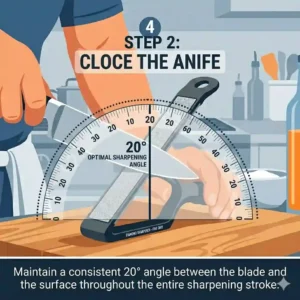
When setting up your workstation, elevate your bench stone so your elbows rest at a natural 90-degree angle. This engages your larger shoulder muscles rather than relying on wrist flexion, providing vastly superior angle control. For guided systems like the Work Sharp, secure the chassis to a heavy cutting board using C-clamps. A shifting base is the number one cause of uneven bevels.
Furthermore, always employ edge-trailing strokes (pulling the spine toward you) when finishing your edge. Edge-leading strokes (pushing the sharp edge into the stone) run the risk of biting into the plate, instantly dulling the micro-apex you just worked so hard to create.
✨ Don’t Miss These Exclusive Deals!
🔍 Take your edge maintenance to the next level with these carefully selected products. Click on any highlighted item to check current pricing and availability. These tools will help you create authentic, razor-sharp results your family and friends will appreciate!
Conclusion: The Sharp End of the Stick
Transitioning to a diamond sharpener is a defining moment in any tool owner’s journey. You stop fighting your abrasives and start actually maintaining your edges. While the initial investment might raise an eyebrow, the sheer speed, absolute flatness, and zero-maintenance lifestyle heavily outweigh the costs.
Whether you opt for the massive surface area of the DMT W8EFC for your bench work, or lean into the precision engineering of the Work Sharp Precision Adjust Elite for your pocket knives, remember the golden rules: let the diamonds do the work, keep your pressure light, and keep the surface clean.
Mastering these tools doesn’t just save your blades; it brings back the joy of using a truly terrifying, razor-sharp edge in your daily life. And once you experience that, there is no going back to dull, crushing cuts.
FAQs
❓ What is a diamond sharpener best used for?
✅ It is best used for quickly reshaping dull edges, repairing chips, and sharpening modern, high-wear-resistant “super steels.” They cut faster than traditional waterstones and remain perfectly flat, making them ideal for both woodworking tools and premium kitchen knives…
❓ How long does a diamond sharpener last?
✅ With proper care and light pressure, a high-quality monocrystalline plate can last 5 to 10 years of regular use. Cheap polycrystalline models or applying excessive downward pressure can wear out the abrasive coating in just a few months…
❓ Do you use a diamond sharpener wet or dry?
✅ You should always use them wet. A few drops of water with dish soap or a dedicated honing fluid suspends the metal shavings (swarf), preventing the abrasive surface from clogging up and glazing over during your sharpening session…
❓ Can a diamond sharpener ruin a knife?
✅ Yes, if used improperly. Because they remove metal aggressively, over-sharpening or using a coarse grit unnecessarily can grind away years of a knife’s lifespan in minutes. Always use the finest grit necessary for the job…
❓ Why does my new diamond sharpener feel so rough?
✅ New plates have a break-in period. During the first dozen uses, loosely bonded and over-height diamonds are sheared off. The stone will quickly settle into its true, slightly smoother grit rating and maintain that consistency for years…
Recommended for You
- 5 Best Diamond Knife Sharpening Tools of 2026: An Expert’s Guide
- 5 Best knife lanyard beads of 2026: Epic EDC Upgrades
- 5 Best diamond sharpeners for knives in 2026: An Expert’s Brutally Honest Review
Disclaimer: This article contains affiliate links. As an Amazon Associate, I earn from qualifying purchases. If you purchase products through these links, we may earn a small commission at no additional cost to you.
✨ Found this helpful? Share it with your friends! 💬🤗
[addtoany]
